Category: Blood Sugar Control

  • The Upward Spiral: How Fasting, Exercise, Sleep and Blood Sugar Regulation Changed My Health

    The Upward Spiral: How Fasting, Exercise, Sleep and Blood Sugar Regulation Changed My Health

    Accessible Steps to Healing

    The content of the HealingT1D website is for educational and information purposes only.  It does not contain medical advice. The contents of this website are not intended to substitute for professional medical advice, diagnosis or treatment. Please always consult with your doctor, physician, or other qualified healthcare professional before making any adjustments to your routine or healthcare regime.  HealingT1D and all associated with it will not be held liable for any risks or issues associated with using or acting upon the information on this site.

    Summary: Over the last six or seven months, I have experienced a noticeable shift in both my physical and mental wellbeing. What began as a period of illness and an unexpected four-day fast has evolved into something much deeper: a complete change in how my body feels, how my mind functions, and how I move through daily life. I initially thought the “magic” came purely from fasting, but the more I reflected, the more I realised this transformation was likely the result of several interconnected changes building on each other over time. Sleep, movement, blood sugar regulation, dopamine, and nervous system regulation all seem to play a role in the upward spiral I now feel myself living in.

    Introduction

    I have spent a lot of time trying to understand what may have caused the increase in healing I feel in my body over the past several months. At first, I believed the answer was simple: a bout of gastroenteritis that forced me into an unplanned four-day fast somehow “reset” my system. But as time has passed, I have started to think the truth is more layered — and much more hopeful — than that.

    Fasting and Its Ability to Heal the Body

    Fasting has long been associated with healing and repair within the body. During periods without food, the body shifts away from constantly processing incoming energy and instead focuses on maintenance and restoration. Blood sugar levels stabilise, insulin levels drop, inflammation may decrease, and the body begins relying on stored energy reserves. Some research also points toward processes such as autophagy, where damaged cells are broken down and recycled more efficiently during extended fasting periods.

    After around four days of fasting, the body is functioning very differently than it does during normal eating patterns. Glycogen stores are depleted, the body becomes more reliant on fat and ketones for fuel, and many people report improved mental clarity and reduced cravings. A friend of mine suggested that perhaps my dopamine system had also undergone a kind of “reset” during that period. I do not know exactly how scientifically accurate that is, but I do know one thing with certainty: my sugar cravings almost completely disappeared afterwards.

    I remember noticing it in small moments at first. Walking past food shops without mentally negotiating with myself. Sitting in the evening without feeling that restless pull towards snacks or stimulation. It felt strangely quiet in my mind.

    How Exercise Replaced Sugar Cravings and Stabilised My Blood Sugar

    I spoke often about the “magic” that happened after my illness. At the same time, I spent a lot of energy worrying that it would suddenly disappear. If I skipped one of my walks, I worried it marked the beginning of the end — the return of weight gain, poor health, and feeling trapped in old patterns again.

    I do not feel that way now. With more reflection, I no longer think there was one magical event that permanently changed me overnight. Instead, I think I unknowingly replaced one source of dopamine with another. Previously, sugar and stimulation filled that role. Now, exercise seems to fulfil much of that need instead.

    Movement has become regulating rather than punishing. By exercising consistently and timing movement properly, I have flattened my blood sugar profile significantly. And because my blood sugar is more stable, the cravings that once felt overwhelming have dramatically reduced. It feels less like constantly fighting my body and more like finally working with it.

    The Upward Spiral of Sleep, Exercise and Better Health

    I think there is a spiral that takes place in life. It can spiral downward, but it can also spiral upward. When you are spiralling upward, each positive change reinforces the next.

    For me, sleep comes first. When I sleep well and get enough rest, I have more energy to devote to the other areas of my life. Conversely, when I have slept badly, I notice almost immediately that I do not want to eat as well, move as much, or engage as fully with life. Poor sleep affects everything downstream from it.

    With proper sleep, movement becomes easier. I walk more, and more importantly, I actually want to walk. I look forward to moving my body rather than forcing myself to do it. I remember one walk in particular when I suddenly realised I was not counting the minutes until I could go home. I felt present. Calm. My body felt lighter somehow, even before any physical weight loss became noticeable.

    Then the food choices follow naturally. I want to nourish myself properly because I am building a life that feels worth sustaining.

    As exercise becomes more consistent, my blood sugar stabilises further, which reduces the physiological cravings that used to dominate my thinking. Each piece supports the next: sleep improves movement, movement improves food choices, food choices improve blood sugar stability, and stable blood sugar improves mood, energy, and motivation. The spiral continues upward.

    Living in Rest-and-Repair Instead of Fight-or-Flight

    One of the biggest changes I have noticed is that I genuinely feel out of fight-or-flight mode. My body feels calmer. The constant cravings have reduced significantly. The endless need for stimulation — always needing to know what the next thing is, always searching for another hit of distraction or dopamine — has diminished.

    I am simply happier.

    The difference is difficult to describe unless you have experienced it yourself. It feels as though my nervous system has stopped bracing for impact all the time. I no longer wake up already mentally exhausted before the day has even begun. There is more space between thoughts now. More stillness.

    I no longer spend large amounts of time questioning the meaning of life or feeling trapped on an endless treadmill that never seems to lead anywhere. I sleep better. I think more clearly. I feel more optimistic and future-focused.  I have started rollerskating and ballroom dancing, taken up motorbike riding again, started a yoga and meditation practice.  I am finding joy in my days.

    Perhaps most importantly, I no longer feel trapped in repetitive loops about the past. That includes both the immediate past — replaying conversations and wishing I had said something differently — and the distant past, endlessly revisiting earlier life experiences and the impact they had on me. My mind feels less stuck. There is more forward momentum.

    Why Healthy Habits Are Easier to Return to Over Time

    This state is not permanent or effortless. There have been times when I have not been able to maintain the lifestyle that supports it. At one point, for example, I injured my foot and could not walk properly for a week. Almost immediately, I noticed my ADHD symptoms becoming more prominent again. My food cravings increased, my mood dropped, and I felt less regulated overall.

    What surprised me, though, was how much easier it was to recover the second time. I already knew what “better” felt like. I already had evidence that my body could return to balance. Instead of feeling hopeless, I simply felt temporarily off-course.

    That is why I no longer think any of this is “magic.” It is something much more grounded than that. It is the result of systems within the body and mind working together in a healthier way. And because of that, it also feels achievable — not just for me, but potentially for many other people too.

    Closing Thoughts

    Looking back, I no longer believe there was one single event responsible for the healing I have experienced. The four-day fast may have acted as a catalyst, but the real transformation seems to have come from the interaction between sleep, movement, blood sugar stability, nervous system regulation, and dopamine. Each positive change reinforced the next until my body and mind began functioning differently as a whole.  It was just a result of one step at a time.

    What strikes me most is how physical this shift feels. This is not simply a change in mindset or attitude; it feels like a change in operating system. Once you experience what it feels like to live in rest-and-repair rather than constant fight-or-flight, you begin to recognise how profoundly the body shapes the mind.

    And perhaps that is the most hopeful part of all. If these systems can spiral downward, they can also spiral upward. Small changes build upon each other over time. Healing may not arrive all at once in some dramatic moment, but slowly, quietly, through repeated acts of rest, movement, nourishment, and care.

    GET HEALINGT1D’S FUTURE ARTICLES IN YOUR INBOX!

    Get the latest musings and findings straight to your email inbox.

      Picture of Natalie Leader
      Natalie Leader

      Natalie is a blogger with Type 1 Diabetes. Natalie’s special gifts are questioning the status quo and being a rebel. She is using these gifts to question medical ‘knowledge’ and find a true cure for Type 1 Diabetes.
      The content of the HealingT1D website is for educational and information purposes only.  It does not contain medical advice. The contents of this website are not intended to substitute for professional medical advice, diagnosis or treatment. Please always consult with your doctor, physician, or other qualified healthcare professional before making any adjustments to your routine or healthcare regime.  HealingT1D and all associated with it will not be held liable for any risks or issues associated with using or acting upon the information on this site.
      Recent Comments:
    • Losing Weight With T1D

      Losing Weight With T1D

      A Complex But Achievable Outcome
      The content of the HealingT1D website is for educational and information purposes only.  It does not contain medical advice. The contents of this website are not intended to substitute for professional medical advice, diagnosis or treatment. Please always consult with your doctor, physician, or other qualified healthcare professional before making any adjustments to your routine or healthcare regime.  HealingT1D and all associated with it will not be held liable for any risks or issues associated with using or acting upon the information on this site.
      Summary: Losing weight with Type 1 diabetes can feel incredibly complicated, especially when blood sugars, hypos, insulin, cravings, and food guilt all get tangled together. In this article, I’m sharing my personal experience with weight changes, emotional eating, and what I’ve learned about how blood sugar swings can affect hunger and cravings.

      Introduction

      For most of my adult life, I’ve carried a secret code with Type 1 diabetes that not everyone sees straight away. I’ve spent years feeling frustrated by my weight, confused by cravings, and honestly exhausted by the constant balancing act that comes with managing blood sugars while also trying to lose weight.

      Over time, though, I’ve started learning more about how my body actually works — and that’s changed everything. This isn’t about dieting advice or chasing perfection. It’s about understanding the connection between blood sugars, insulin, cravings, and food, and how those things can massively affect the way we eat and feel.

      The Weight Changes Over Time

      I have been overweight for all of my adult life while living with Type 1 diabetes, having been diagnosed at the age of one.

      Over the years, my weight has gone up and down at different times, but what I’ve started to understand now is how much blood sugar levels and physiology may have been influencing my hunger and eating patterns all along.

      Understanding What Was Really Happening

      This time, I’ve lost around 45 pounds. But I want to be really clear about something — this isn’t from “trying” to lose weight in the traditional sense.

      I’m not battling cravings every second. I’m not counting calories or forcing myself through restrictive diets. My blood sugars have actually improved, and that seems to have changed my relationship with food more than anything else.

      As my blood sugars have started to stabilise, I’ve noticed I naturally eat less. I no longer feel that constant, intense urge to overeat.

      That’s been huge for me because, for a long time, I assumed I was an emotional eater. I thought my eating habits were about comfort, stress, or lack of self-control. But the more I’ve learned about blood sugars and how the body responds to them, the more I’ve realised that a huge amount of what I experienced was actually physiological.

      Cravings, Comfort Eating, and Blood Sugars

      I have learnt a lot without fully realising it at the time.

      When I used to have periods where my blood sugars were high for long stretches, I would end up overeating constantly. Not because I lacked willpower, but because I was genuinely craving food all the time.

      Looking back, I can see how much of my eating was driven by the physical effects of unstable blood sugars.

      I genuinely enjoy food. I love a good plate of food just like anyone else. But what I’ve started noticing is that when my blood sugars are more stable, the cravings are nowhere near as intense.   That pull for having to have a food is just not there.

      And this is the part I find fascinating.

      What I’ve Learned About High Blood Sugars and Cravings

      I’ve learned that, for me, both high and low blood sugars can create cravings, but in different ways.

      Low blood sugars are obvious because the body needs glucose immediately. Every cell in my body is basiclaly screaming for glucose and I’m pretty sure would murder most things just to get some.  But high blood sugars seem to create a different kind of hunger altogether.

      When blood sugar levels stay high, the body struggles to properly use the glucose already circulating in the bloodstream. Insulin resistance can also play a role. Even though glucose is present, the cells aren’t necessarily getting the energy they need.  It’s like being at an vending machine, thirsty, and seeing all those lovely chilled bottles of water staring back at you.  But you just can’t reach them (without some money, anyway, which I guess in this really bad analogy would represent the insulin…?!).  So you get thirstier and thirstier, your body is struggling and will keep screaming for more.

      So, despite having high blood sugar levels, my body keeps throwing out hunger signals, hoping that the food delivered this time will be accessible to the cells.

      That creates this strange cycle where I crave more food, (try to resist but usually…) eat more food, and then often end up with even higher blood sugars afterwards.

      Once I started understanding that, a lot of things suddenly made sense.

      I Wasn’t An Emotional Eater After All

      For years, I genuinely believed I was an emotional eater.

      I assumed the cravings, overeating, and constant thoughts about food were all psychological. I blamed myself for lacking discipline and thought food had become some kind of emotional coping mechanism.

      But now, looking back with a better understanding of Type 1 diabetes and blood sugar fluctuations, I honestly don’t think that was true.

      What I was experiencing was far more physical than emotional.

      When blood sugars swing constantly — especially when they stay high for long periods — the body sends out very real hunger signals. Cravings intensify, energy regulation becomes messy, and the drive to eat can become relentless.

      But, at this point, I realised something…  Whilst I can’t outsmart my body, maybe I can work more intelligently with it.  When my body is craving sugar, the first thing I do is test my blood sugars.  And I would say 95% of the time, my blood sugars are out of range.  If they’re low, obviously I’m going to eat accordingly and not take this into account in any way, shape or form for my weight loss goals.  I will not eat less later or punish myself in any other way for that.  It’s just part of life.  For high blood sugars, though, I’ve realised I do have some choice.  I can choose to move.  Even ten minutes of walking makes a difference and can really downregulate the intensity of the cravings for me.

      Repeatedly witnessing the link between the presence of cravings and the number on my blood glucose meter really cemented it for me.  And then empowering myself to realise that I can actually resist my biology, at least for 10 minutes, to correct my blood sugars back into range, or nearer my range, was a game-changer.  That’s what made me realise this wasn’t really about emotional eating at all.

      Food Isn’t Just About Willpower When You Have T1D

      For years, I blamed myself.

      I thought my overeating was purely emotional or that I simply lacked self-control. But now I realise it was far more complicated than that.

      When your blood sugars are constantly fluctuating, your body is under stress. Hunger signals get confused, cravings intensify, and the body can constantly push you towards eating because it believes it still needs energy.

      That doesn’t mean personal responsibility disappears, but it does mean there’s more happening beneath the surface than people often realise.

      The Importance of Peace in Healing

      The other thing I’ve come to believe very strongly is that the body — and honestly the entire mind-body ecosystem — needs peace in order to heal.

      Stress, pressure, guilt, constant restriction, fighting yourself all the time… none of that creates an environment where the body feels safe. And I genuinely believe that safety matters in healing.  Getting out of a fight-or-flight response is a massive tranche of getting to healing.

      The calmer and more stable my life, mind, and blood sugars become, the better my body seems to function overall. My insulin needs reduce, my cravings reduce, and everything feels less chaotic.

      For me, this journey has become about much more than weight loss. It’s about creating a bodily environment that supports healing rather than constantly pushing against it.

      And whilst Type 1 diabetes is obviously complex, I personally feel that peace within the body is an important part of giving it the best possible chance to function well and reduce insulin needs as much as possible.

      Closing Thoughts

      Living with Type 1 diabetes affects so much more than blood sugar numbers. It can influence hunger, cravings, emotions, energy levels, and even the way we think about ourselves.

      For me, understanding the connection between blood sugars and food has been incredibly eye-opening. As my blood sugars have improved, my eating habits have naturally changed too — not through punishment or restriction, but through finally understanding what my body was trying to tell me.

      If you’re struggling with weight, cravings, or food while living with T1D, you are definitely not alone. Sometimes understanding the “why” behind it all can make a huge difference.

      GET HEALINGT1D’S FUTURE ARTICLES IN YOUR INBOX!

      Get the latest musings and findings straight to your email inbox.

        Picture of Natalie Leader
        Natalie Leader

        Natalie is a blogger with Type 1 Diabetes. Natalie’s special gifts are questioning the status quo and being a rebel. She is using these gifts to question medical ‘knowledge’ and find a true cure for Type 1 Diabetes.

        The content of the HealingT1D website is for educational and information purposes only.  It does not contain medical advice. The contents of this website are not intended to substitute for professional medical advice, diagnosis or treatment. Please always consult with your doctor, physician, or other qualified healthcare professional before making any adjustments to your routine or healthcare regime.  HealingT1D and all associated with it will not be held liable for any risks or issues associated with using or acting upon the information on this site.
        Recent Comments:
      • 30 Reasons to Walk with Type 1 Diabetes

        30 Reasons to Walk with Type 1 Diabetes

        The Benefits of Walking Are Immense!

        The content of the HealingT1D website is for educational and information purposes only.  It does not contain medical advice. The contents of this website are not intended to substitute for professional medical advice, diagnosis or treatment. Please always consult with your doctor, physician, or other qualified healthcare professional before making any adjustments to your routine or healthcare regime.  HealingT1D and all associated with it will not be held liable for any risks or issues associated with using or acting upon the information on this site.

        Summary: Feeling low on motivation to get moving? This post is your gentle nudge (and mine!) to lace up those trainers and get walking — with 30 solid reasons why it’s one of the best things you can do for your body, mind, and Type 1 Diabetes management.

        Image by Jensen Art Co from Pixabay

        Introduction

        It’s that time of year again — when I need to dig deep for the motivation to actually put my trainers on and head out the door for a walk. The struggle is real!

        So, in the spirit of giving myself a gentle kick up the backside (and maybe inspiring a few of you too), I decided to make a list — a big one — to help get the movement mojo going.

        And honestly, why keep it to myself when it might help someone else who’s also side-eyeing their walking shoes right now?

        So here it is: 30 powerful reasons to get out and walk (for those of us who can!).

        🌿 30 Reasons to Walk Daily with Type 1 Diabetes

        🩸 Blood Sugar & Insulin Balance

        1. Improves insulin sensitivity – helping your body use insulin more effectively.

        2. Reduces post-meal glucose spikes – walking after meals helps lower blood sugar naturally.

        3. Can decrease insulin requirements – with proper medical guidance, walking may reduce the amount of insulin needed.

        4. Helps correct high blood sugars safely – gentle walking can bring glucose down (when not dangerously high).

        5. Promotes more predictable glucose patterns – less risk of sharp highs or lows compared to intense workouts.

        6. Supports better HbA1c levels – consistent daily walks contribute to long-term glucose control.

        ❤️ Heart, Circulation & Detox Support

        1. Boosts cardiovascular fitness – strengthens your heart and improves circulation.

        2. Lowers blood pressure – walking regularly helps keep blood pressure in a healthy range.

        3. Improves cholesterol balance – increases HDL (“good”) and reduces LDL (“bad”) cholesterol.

        4. Stimulates lymphatic flow – enhances your body’s natural detox system, flushing out waste and bacteria.

        5. Improves gut function and reduces gastroparesis symptoms – light activity after meals helps digestion.

        6. Builds stronger bones – weight-bearing movement lowers the risk of osteoporosis and fractures.

        ⚖️ Weight, Metabolism & Physical Wellbeing

        1. Aids weight management – supports healthy fat loss and muscle tone.

        2. Boosts metabolism – keeps your body burning energy efficiently.

        3. Improves aerobic fitness – strengthens lungs and endurance over time.

        4. Supports joint health and flexibility – movement reduces stiffness and pain.

        5. Is low-risk and low-impact – gentle on the body, making it suitable for most fitness levels.

        🧠 Mental, Emotional & Spiritual Benefits

        1. Reduces stress – calms the nervous system and therefore stabilises blood glucose indirectly.

        2. Improves mood – boosts endorphins and serotonin, easing depression and anxiety.

        3. Supports mental clarity – increases oxygen flow to the brain for sharper focus.

        4. Improves sleep quality – regular activity helps you fall and stay asleep more easily.

        5. Enhances confidence and self-discipline – builds a sense of control over your health.

        6. Connects you with nature – nurturing mindfulness, calm, and a sense of spiritual grounding.

        ☀️ Practical & Lifestyle Advantages

        1. Increases Vitamin D exposure – outdoor walking supports bone, immune, and mood health.

        2. Inexpensive and accessible – no gym, equipment, or membership required.

        3. Can be done anywhere – easy to maintain the habit while traveling.

        4. Fits into daily routines easily – short walks after meals or errands make it sustainable.

        5. Encourages social connection – walking with friends or groups adds motivation and joy.

        6. Supports long-term health and longevity – lowers risk of complications and chronic disease.

        7. Empowers you to take active ownership of your healing journey – a simple, consistent act that builds strength, resilience, and hope.

        Closing Thoughts

        Walking might seem small, but it’s one of those beautiful little things that changes everything over time — your mood, your blood sugars, your sense of self.

        So here’s to movement, mindfulness, and finding our rhythm again… one walk at a time.

        Now… shall we both stop reading about walking and actually go for one?

        GET HEALINGT1D’S FUTURE ARTICLES IN YOUR INBOX!

        Get the latest musings and findings straight to your email inbox.

          Picture of Natalie Leader
          Natalie Leader

          Natalie is a blogger with Type 1 Diabetes. Natalie’s special gifts are questioning the status quo and being a rebel. She is using these gifts to question medical ‘knowledge’ and find a true cure for Type 1 Diabetes.

          The content of the HealingT1D website is for educational and information purposes only.  It does not contain medical advice. The contents of this website are not intended to substitute for professional medical advice, diagnosis or treatment. Please always consult with your doctor, physician, or other qualified healthcare professional before making any adjustments to your routine or healthcare regime.  HealingT1D and all associated with it will not be held liable for any risks or issues associated with using or acting upon the information on this site.
          Recent Comments:
        • Skin Grip’s Adhesive Patches

          Skin Grip’s Adhesive Patches

          Enhancing The CGM Experience

          The content of the HealingT1D website is for educational and information purposes only.  It does not contain medical advice. The contents of this website are not intended to substitute for professional medical advice, diagnosis or treatment. Please always consult with your doctor, physician, or other qualified healthcare professional before making any adjustments to your routine or healthcare regime.  HealingT1D and all associated with it will not be held liable for any risks or issues associated with using or acting upon the information on this site.
          healing curing type 1 diabetes naturally
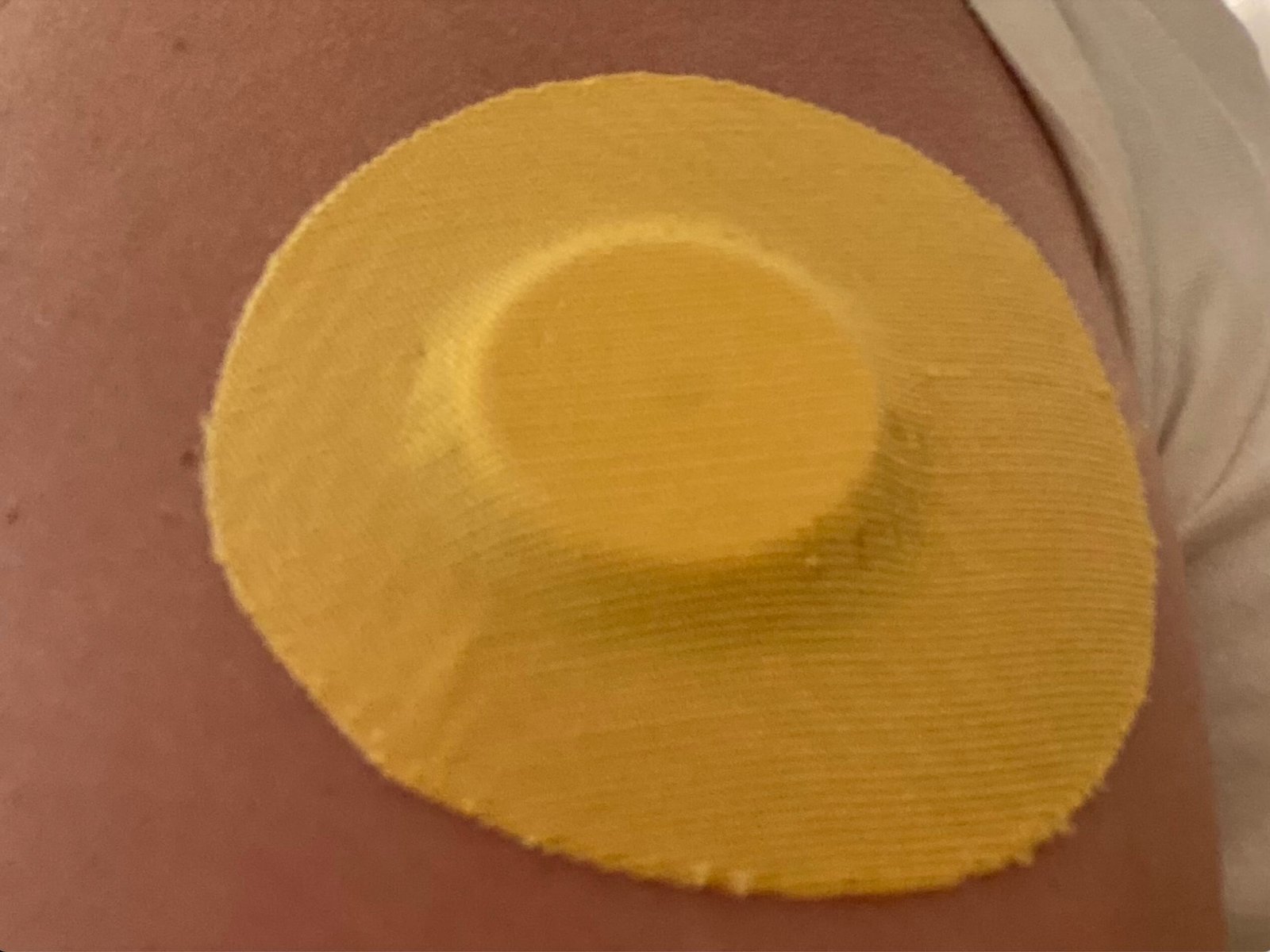
          Skin Grip Adhesive Patch for the Freestyle Libre 2 in Yellow

          Summary: Discover the solution to common adhesive issues with Continuous Glucose Monitoring sensors in Skin Grip’s Adhesive Patches. In this blog post, the author shares her journey of overcoming frustrations with sensor adhesion by using Skin Grip’s reliable and durable fix. Learn about the features that set Skin Grip apart, making it a valuable addition to your diabetes management toolkit.

          Embarking on the journey of diabetes management with Freestyle Libre 2 brought incredible insights into my blood sugar levels. Yet, one persistent challenge remained – the sensor’s adhesive quality. Today, I unravel the tale of my six-year-long quest to find the perfect solution and introduce you to the game-changer: Skin Grip Adhesive Patches. Get ready to bid farewell to adhesive woes and embrace a worry-free experience with your Freestyle Libre 2.

          The Annoyances of the Original Freestyle Libre

          I started using the Freestyle Libre some six or seven years ago.  Whilst I loved the product as it opened my eyes up to all of my blood sugar data, one of my primary concerns was the sensor’s tendency to lose adhesion after encounters with water or the occasional run-in with a door frame. This became particularly annoying as these sensors were not exactly cheap – they were not covered by insurance or the NHS in those days. To overcome this, I tried to develop some tricks like avoiding water for the first 24 hours (put it on after drying your skin from one shower and then don’t shower or bathe again for the next 24 hours!) and being hyper-aware of potential obstacles at arm height (there’s a lot of them!). However, life had a knack for turning these precautions into an Olympic-level game of “Don’t Knock Your Freestyle Libre Off”!  I needed an easier solution.

          Adhesive Patches of Yesteryear

          Enter adhesive patches – a concept aimed at securing the sensor in place. I experimented with various solutions, including simple pharmacy-bought tape and also purpose-built patches. However, none provided a foolproof solution. These early patches still started to peel off within a few days and removing them without dislodging the sensor became a challenging task.  So all I could do was apply more tape on top of the old sensor or tape, which resulted in a lot of tape by the end of two weeks!

          Enter the Solution: Skin Grip Adhesive Patches

          Skin Grip proved to be the game-changer I was looking for. These patches are waterproof, sweatproof, and ensure the sensor stays securely in place for the full two weeks of wear. Unlike other solutions, Skin Grip has consistently delivered on its promise, lasting the entire sensor duration  (their website says they last between 12-14 days, but I’ve never had them come off before my sensor has expired).

          The Lowdown on Skin Grip Adhesive Patches

          Affordability, durability, and variety are the key features of Skin Grip Adhesive Patches. Available in packs of 20 and various colours (rainbow, pastel, black, blue, camouflage, etc.), these patches cater to a range of tastes.  They also come in different shapes that accommodate a range of Continuous Glucose Monitoring devices, including the Freestyle Libre 2, Dexcom G6, Insulet Omnipod, and the Medtronic Guardian and also insulin pumps. You can conveniently find them on platforms like Amazon, making it easy to incorporate them into your diabetes management routine without any extra stress.

          Caution

          While Skin Grip Adhesive Patches offer an excellent solution, it’s essential to consider potential allergies to plasters due to their adhesive nature. Additionally, choose a patch colour that you’re comfortable wearing continuously for the full two weeks, as attempting to remove the patch mid-cycle might result in the sensor coming off too – a testament to their strong adhesion.

          Conclusion

          In sharing my experience with Skin Grip Adhesive Patches, I want to emphasize that this is not a sponsored post. When something genuinely improves my diabetes management, I believe in sharing it with others. It’s not about financial gain but enhancing the quality of our lives. Consider Skin Grip as a valuable addition to your diabetes management toolkit, providing peace of mind and reliability to your Freestyle Libre 2 experience.

          GET HEALINGT1D’S FUTURE ARTICLES IN YOUR INBOX!

          Get the latest musings and findings straight to your email inbox.

            Picture of Natalie Leader
            Natalie Leader

            Natalie is a blogger with Type 1 Diabetes. Natalie’s special gifts are questioning the status quo and being a rebel. She is using these gifts to question medical ‘knowledge’ and find a true cure for Type 1 Diabetes.
            The content of the HealingT1D website is for educational and information purposes only.  It does not contain medical advice. The contents of this website are not intended to substitute for professional medical advice, diagnosis or treatment. Please always consult with your doctor, physician, or other qualified healthcare professional before making any adjustments to your routine or healthcare regime.  HealingT1D and all associated with it will not be held liable for any risks or issues associated with using or acting upon the information on this site.
            Recent Comments:
          • The Glucose Never Lies

            The Glucose Never Lies

            A Programme To Give Knowledge and Empowerment To Those With Type 1 Diabetes

            The content of the HealingT1D website is for educational and information purposes only.  It does not contain medical advice. The contents of this website are not intended to substitute for professional medical advice, diagnosis or treatment. Please always consult with your doctor, physician, or other qualified healthcare professional before making any adjustments to your routine or healthcare regime.  HealingT1D and all associated with it will not be held liable for any risks or issues associated with using or acting upon the information on this site.
            healing curing type 1 diabetes naturally

            Summary: ‘The Glucose Never Lies’ website, created by diabetes veteran John Pemberton, offers valuable insights on managing blood sugars without strict low-carb diets. Structured for easy understanding, it covers foundational diabetes care and a dynamic glucose management model, benefiting continuous glucose monitor users. The author reports early positive outcomes, indicating its potential to revolutionise her diabetes management.

            Hey there!  Today, I want to share an absolutely fantastic website I discovered in my diabetes journey – a website called ‘The Glucose Never Lies‘, crafted by the amazing John Pemberton.

            A Family Legacy: Why John Pemberton Created His Website

            Imagine this: a seasoned Type 1 Diabetes veteran, a Diabetes Dietitian himself, creating a digital haven of knowledge for his own family.  John’s driving force?  His own children.  He wants to pass on his hard-won knowledge to his children, should they one day become diabetic themselves.  This is particularly important for John, given the higher inheritance rate from dads to their offspring.

            Beyond Disclaimers: The Goldmine of Information

            John explicitly and repeatedly wisely states that this website is not intended for anyone other than his children.  He emphasises how no medical relationship is formed and nothing he talks about should be construed as advice for third parties.  However, his website is a goldmine of information!  From tackling blood high  and blood sugars to handling exercise and dosing for meals and even a nerd corner for diabetes research – it’s a must-see.  I strongly recommend looking at what he has to offer and taking any bits that interest you (or even all of it!) to your medical practitioner to discuss if this might suit your particular diabetes situation.

            Health Without Low-Carb Struggles

            What I was particularly excited by is that this is the first resource I’ve found that shows a path to great diabetes health without enforcing a strict low-carb diet. As discussed here, I’ve danced with low-carb diets before, but they never stuck for me. The cravings were real, and “falling off the wagon” became a recurring theme. But now, this website offers a way to achieve more of those flat lines without swearing off carbs entirely – it’s nothing short of brilliant!

            Foundations: Diabetes Care Basics

            I have to say that I find his website fantastic.  It is designed for even the most unknowledgeable amongst us.  His programme for diabetes health basically consists of two stages.  The first, the foundations, covers the basics of diabetes care – such as bolus and basal insulin, dealing with hypoglycaemia, exercise and eating well for diabetes.  Even if you are an individual with a lot of diabetes experience behind you, I suspect that you can still gain a lot of useful information just from this part.  I am more than forty years into my diabetes journey and I still learnt some really great stuff here.  

            Dynamic Glucose Management: GAME, SET and MATCH

            Then comes what John calls ‘Dynamic Glucose Management’ – a three-part model: GAME (stop highs), SET (stay in target), MATCH (prevent lows).  Each part (GAME, SET and MATCH) is an acronym that helps you to remember each part of the model.  Together, these give you the overall map to diabetes health.  Nevertheless, John still goes beyond the foundations and the model to also offer  information on mealtime insulin and tailoring blood sugars for different kinds of exercise.
            Whilst it sounds like a lot of information (it is, after all!), it is broken down into bitesize sections and the whole website can be digested at your own pace. But, please, if you are thinking about implementing anything that The Glucose Never Lies website contains, please first discuss it with your doctor and/or diabetes team.  Making changes like this, particularly if you are relatively new to diabetes, can be challenging without the right support in place.

            Multifaceted Learning: Video And Written Wisdom

            What I particularly like about The Glucose Never Lies website is that each section comes in both video and written format.  Perfect for those end-of-day hours when time is yours but energy is low!

            Just a word of caution…  The Glucose Never Lies is built on the assumption that you are using continuous glucose monitoring.  The three systems that are included are the Freestyle Libre (which I use) plus Dexcom (which John uses) and Medtronic.  John does discuss in detail the use of these and their relative merits.  Therefore, if you don’t have access to CGMs, this approach is probably not going to be the one for you.  Whilst I think there would still be a lot of information to be gained from the website, your ability to implement it may be somewhat limited.

            Early Gains: Implementing Wisdom In Real Life

            I’m in the early stages of implementing John’s wisdom, and guess what? I’ve already shaved off 0.2% from my HbA1c. I’m seeing more flat lines on my Freestyle Libre 2, feeling more positive, and more in control of my blood sugars. Trust me, the time spent on this website is an investment in your health!

            So, head over to The Glucose Never Lies, soak in the knowledge, and let’s conquer diabetes together!

            GET HEALINGT1D’S FUTURE ARTICLES IN YOUR INBOX!

            Get the latest musings and findings straight to your email inbox.

              Picture of Natalie Leader
              Natalie Leader

              Natalie is a blogger with Type 1 Diabetes. Natalie’s special gifts are questioning the status quo and being a rebel. She is using these gifts to question medical ‘knowledge’ and find a true cure for Type 1 Diabetes.
              The content of the HealingT1D website is for educational and information purposes only.  It does not contain medical advice. The contents of this website are not intended to substitute for professional medical advice, diagnosis or treatment. Please always consult with your doctor, physician, or other qualified healthcare professional before making any adjustments to your routine or healthcare regime.  HealingT1D and all associated with it will not be held liable for any risks or issues associated with using or acting upon the information on this site.
              Recent Comments:
            • Get Yourself a Hug!

              Get Yourself a Hug!

              Hugging Others And Hugging Yourself Leads To Healing

              The content of the HealingT1D website is for educational and information purposes only.  It does not contain medical advice. The contents of this website are not intended to substitute for professional medical advice, diagnosis or treatment. Please always consult with your doctor, physician, or other qualified healthcare professional before making any adjustments to your routine or healthcare regime.  HealingT1D and all associated with it will not be held liable for any risks or issues associated with using or acting upon the information on this site.
              healing curing type 1 diabetes naturally
              Summary: Hugging triggers oxytocin release, promoting social bonding and reducing cortisol. Early-life touch shapes vagus nerve development crucial for health. The author’s Type 1 Diabetes led to touch aversion due to medical interventions.  This aversion resembles sensory defensiveness. The Hoffman Process helped the author embrace hugs, easing stress responses. During COVID, when human touch can be risky, self-hugging offers similar benefits, promoting relaxation and healing.

              When I was growing up, I had a teddy bear called ‘Fete Day’.  My great aunt won him for me at our village fete when I was one year old.  That day, I received Fete Day… And also my diagnosis of Type 1 Diabetes.  Fete Day was by my side during my stay in hospital and was with me throughout the whole of my childhood.  I loved him until his leg fell off and had to be ‘operated on’ (sewn back into place!) by my mum.  To me, that bear was, and still is, ‘real’.  (If you’re not sure what I mean by ‘real’…  Please, please, please read the Velveteen Rabbit.  It’s an absolutely beautiful book!)

              I never used to like being hugged.  Fete Day was the exception. He was a safe option.  Thankfully, I came from a family where hugs were generally not high on the priority list and certainly didn’t feature in my daily life.  I felt safer when I wasn’t hugged.  This is unlikely to be without consequences, though.

              The Psychobiology Of Hugging

              The act of hugging produces a series of psychobiological effects in the body.  Primarily, it releases the peptide oxytocin, which is responsible for facilitating social interaction and wellbeing, as well as reducing the stress hormone cortisol.  

              Regular hugging and touch is also essential in early childhood to facilitate the proper development of the vagus nerve.  The vagus nerve is a nerve that runs from the head to the gut.  It is the main component of the parasympathetic nervous system, which contributes to a wide range of bodily functions, including digestion and regulating heart rate.

              So, without hugging in early childhood, and then into adulthood, the body will be rife with raised cortisol levels, poorer digestive function and inhibited social functioning.

              Type 1 Diabetes And The Fear Of Touch

              As I have worked on my healing and investigated my internal world, something has become clear to me about my aversion to hugging.  I believe that my unwillingness to engage in this social norm is easily explained when you look at my experiences through childhood.  In my life, human touch was often followed by sharp pain as the needle of the next syringe went into my bodily tissue or the next finger-prick was required for blood testing.  The vast majority of interactions of touch followed this pattern.  Therefore, the association of touch with pain was strengthened everyday in my mind.  The next touch would most likely cause the next serving of pain.  Touch became physically, and emotionally, painful to me.

              ‘Social Defensiveness’ And Type 1 Diabetes

              The medical community have come up with some names for this response.  Firstly, there is ‘sensory defensiveness’, where a person (adult or child) reacts with a strong ‘fight-or-flight’ (or ‘freeze’) response to a stimulus or sensation that most people wouldn’t consider threatening.  Touch is one of these sensations.

              Secondly, there is ‘haphephobia’.  This is when the aversion to touch has become so marked that it develops into a full phobia.  People with haphephobia will have strong fear or anxiety when thinking about being touched.  This will demonstrate itself physiologically with an increased heart rate, sweating, hot flushes, tingling and other fight-or-flight symptoms.  Social situations became near impossible for these people and life can become extremely difficult.

              I don’t for one second think I have haphephobia but sensory defensiveness feels appropriate.  For years, when someone came towards me for a hug, I  would brace my body and hunch my shoulders.  My breathing rate would slow or stop.  I would turn side-on so that the person ended up hugging my side, rather than my vulnerable chest area.  My whole body had effectively gone into a paused mode, a freeze response.

              Medical News Today states that haphephobia can be caused by experiencing a traumatic event that involved being touched.  I believe the continuous onslaught of invasive medical treatments, at an age when I could not understand, would have created such a ‘little t’ trauma that resulted in a strong aversion to touch.

              Healing A Hugging Aversion

              The turning point for me in hugging career(!) came when I attended the Hoffman Process.  This process was life-changing for me.  Whilst I will not be going into the details of what the process involves (I wouldn’t want to ruin the fun if you haven’t done it yet!!), I will say that it completely transformed my ability to hug.  I learnt to feel safe in a hug.

              I still cannot face being hugged, or touched in any way, when I am angry or extremely upset.  When my fight-or-flight response is activated, hugging is off the agenda.  But, normally, I now happily welcome hugs from friends and family.  When I hug now, I feel this initial moment when my body is tense and my breathing subsides.  But, if I wait maybe just five or ten seconds, I feel my whole system relax as this wave washes over me.  It’s like my whole body is giving a long, slow exhale or sigh.

              My self-observation of this effect is actually supported by scientific research.  This study shows how many forms of physical touch, including hugging, is associated with lower blood pressure, lower heart rate, and higher oxytocin levels.

              Hugging In COVID Times

              Have you seen ‘The Minimalists: Less is Now’ on Netflix?  The Minimalists are two guys, Joshua Fields Millburn and Ryan Nicodemus, who promote the idea of living a good life with less stuff.  I love that!  

              In their documentary, there is a scene where they explain that they are ‘huggers’.  They like to hug, rather than shake hands when they meet people.   (I assume this was filmed in pre-COVID days!).  This scene got me thinking about how they have so successfully implemented a robust hugging schedule(!) in their lives without having to either add it to their to-do list or count their hugs to ensure they have hit a hugging minimum for the day.  It just simply is…  ‘See a person, hug them’!

              I’d love to employ the same strategy, knowing that it is contributing to my health, healing and happiness so effectively.  But, in these current COVID times, I’m not sure it’s the wisest idea for a diabetic.  It certainly comes with additional risks!

              Hug Yourself!

              I believe that there are two workarounds for the ‘no hugging during COVID times’ conundrum.

              Firstly, I intend to hug, and hug often, everyone I live with (as long as they don’t test positively for COVID or start exhibiting symptoms!), including my dogs!  I’m sure they will benefit from this as much as I will.

              Secondly, I can hug myself.  This study has found that, like hugging others, self-hugging releases the love hormone oxytocin and also produces anti-stress effects, such as reduced blood pressure and cortisol levels.  It also improves the function of the gastrointestinal tract.  In other words, it takes the body from a state of ‘fight-or-flight’ to one of relaxation…  And relaxation is where the healing takes place.

              healing curing type 1 diabetes naturally
              healing curing type 1 diabetes naturally

              GET HEALINGT1D’S FUTURE ARTICLES IN YOUR INBOX!

              Get the latest musings and findings straight to your email inbox.

                Picture of Natalie Leader
                Natalie Leader

                Natalie is a blogger with Type 1 Diabetes. Natalie’s special gifts are questioning the status quo and being a rebel. She is using these gifts to question medical ‘knowledge’ and find a true cure for Type 1 Diabetes.

                The content of the HealingT1D website is for educational and information purposes only.  It does not contain medical advice. The contents of this website are not intended to substitute for professional medical advice, diagnosis or treatment. Please always consult with your doctor, physician, or other qualified healthcare professional before making any adjustments to your routine or healthcare regime.  HealingT1D and all associated with it will not be held liable for any risks or issues associated with using or acting upon the information on this site.
                Recent Comments: