Category: Exercise

  • The Upward Spiral: How Fasting, Exercise, Sleep and Blood Sugar Regulation Changed My Health

    The Upward Spiral: How Fasting, Exercise, Sleep and Blood Sugar Regulation Changed My Health

    Accessible Steps to Healing

    The content of the HealingT1D website is for educational and information purposes only.  It does not contain medical advice. The contents of this website are not intended to substitute for professional medical advice, diagnosis or treatment. Please always consult with your doctor, physician, or other qualified healthcare professional before making any adjustments to your routine or healthcare regime.  HealingT1D and all associated with it will not be held liable for any risks or issues associated with using or acting upon the information on this site.

    Summary: Over the last six or seven months, I have experienced a noticeable shift in both my physical and mental wellbeing. What began as a period of illness and an unexpected four-day fast has evolved into something much deeper: a complete change in how my body feels, how my mind functions, and how I move through daily life. I initially thought the “magic” came purely from fasting, but the more I reflected, the more I realised this transformation was likely the result of several interconnected changes building on each other over time. Sleep, movement, blood sugar regulation, dopamine, and nervous system regulation all seem to play a role in the upward spiral I now feel myself living in.

    Introduction

    I have spent a lot of time trying to understand what may have caused the increase in healing I feel in my body over the past several months. At first, I believed the answer was simple: a bout of gastroenteritis that forced me into an unplanned four-day fast somehow “reset” my system. But as time has passed, I have started to think the truth is more layered — and much more hopeful — than that.

    Fasting and Its Ability to Heal the Body

    Fasting has long been associated with healing and repair within the body. During periods without food, the body shifts away from constantly processing incoming energy and instead focuses on maintenance and restoration. Blood sugar levels stabilise, insulin levels drop, inflammation may decrease, and the body begins relying on stored energy reserves. Some research also points toward processes such as autophagy, where damaged cells are broken down and recycled more efficiently during extended fasting periods.

    After around four days of fasting, the body is functioning very differently than it does during normal eating patterns. Glycogen stores are depleted, the body becomes more reliant on fat and ketones for fuel, and many people report improved mental clarity and reduced cravings. A friend of mine suggested that perhaps my dopamine system had also undergone a kind of “reset” during that period. I do not know exactly how scientifically accurate that is, but I do know one thing with certainty: my sugar cravings almost completely disappeared afterwards.

    I remember noticing it in small moments at first. Walking past food shops without mentally negotiating with myself. Sitting in the evening without feeling that restless pull towards snacks or stimulation. It felt strangely quiet in my mind.

    How Exercise Replaced Sugar Cravings and Stabilised My Blood Sugar

    I spoke often about the “magic” that happened after my illness. At the same time, I spent a lot of energy worrying that it would suddenly disappear. If I skipped one of my walks, I worried it marked the beginning of the end — the return of weight gain, poor health, and feeling trapped in old patterns again.

    I do not feel that way now. With more reflection, I no longer think there was one magical event that permanently changed me overnight. Instead, I think I unknowingly replaced one source of dopamine with another. Previously, sugar and stimulation filled that role. Now, exercise seems to fulfil much of that need instead.

    Movement has become regulating rather than punishing. By exercising consistently and timing movement properly, I have flattened my blood sugar profile significantly. And because my blood sugar is more stable, the cravings that once felt overwhelming have dramatically reduced. It feels less like constantly fighting my body and more like finally working with it.

    The Upward Spiral of Sleep, Exercise and Better Health

    I think there is a spiral that takes place in life. It can spiral downward, but it can also spiral upward. When you are spiralling upward, each positive change reinforces the next.

    For me, sleep comes first. When I sleep well and get enough rest, I have more energy to devote to the other areas of my life. Conversely, when I have slept badly, I notice almost immediately that I do not want to eat as well, move as much, or engage as fully with life. Poor sleep affects everything downstream from it.

    With proper sleep, movement becomes easier. I walk more, and more importantly, I actually want to walk. I look forward to moving my body rather than forcing myself to do it. I remember one walk in particular when I suddenly realised I was not counting the minutes until I could go home. I felt present. Calm. My body felt lighter somehow, even before any physical weight loss became noticeable.

    Then the food choices follow naturally. I want to nourish myself properly because I am building a life that feels worth sustaining.

    As exercise becomes more consistent, my blood sugar stabilises further, which reduces the physiological cravings that used to dominate my thinking. Each piece supports the next: sleep improves movement, movement improves food choices, food choices improve blood sugar stability, and stable blood sugar improves mood, energy, and motivation. The spiral continues upward.

    Living in Rest-and-Repair Instead of Fight-or-Flight

    One of the biggest changes I have noticed is that I genuinely feel out of fight-or-flight mode. My body feels calmer. The constant cravings have reduced significantly. The endless need for stimulation — always needing to know what the next thing is, always searching for another hit of distraction or dopamine — has diminished.

    I am simply happier.

    The difference is difficult to describe unless you have experienced it yourself. It feels as though my nervous system has stopped bracing for impact all the time. I no longer wake up already mentally exhausted before the day has even begun. There is more space between thoughts now. More stillness.

    I no longer spend large amounts of time questioning the meaning of life or feeling trapped on an endless treadmill that never seems to lead anywhere. I sleep better. I think more clearly. I feel more optimistic and future-focused.  I have started rollerskating and ballroom dancing, taken up motorbike riding again, started a yoga and meditation practice.  I am finding joy in my days.

    Perhaps most importantly, I no longer feel trapped in repetitive loops about the past. That includes both the immediate past — replaying conversations and wishing I had said something differently — and the distant past, endlessly revisiting earlier life experiences and the impact they had on me. My mind feels less stuck. There is more forward momentum.

    Why Healthy Habits Are Easier to Return to Over Time

    This state is not permanent or effortless. There have been times when I have not been able to maintain the lifestyle that supports it. At one point, for example, I injured my foot and could not walk properly for a week. Almost immediately, I noticed my ADHD symptoms becoming more prominent again. My food cravings increased, my mood dropped, and I felt less regulated overall.

    What surprised me, though, was how much easier it was to recover the second time. I already knew what “better” felt like. I already had evidence that my body could return to balance. Instead of feeling hopeless, I simply felt temporarily off-course.

    That is why I no longer think any of this is “magic.” It is something much more grounded than that. It is the result of systems within the body and mind working together in a healthier way. And because of that, it also feels achievable — not just for me, but potentially for many other people too.

    Closing Thoughts

    Looking back, I no longer believe there was one single event responsible for the healing I have experienced. The four-day fast may have acted as a catalyst, but the real transformation seems to have come from the interaction between sleep, movement, blood sugar stability, nervous system regulation, and dopamine. Each positive change reinforced the next until my body and mind began functioning differently as a whole.  It was just a result of one step at a time.

    What strikes me most is how physical this shift feels. This is not simply a change in mindset or attitude; it feels like a change in operating system. Once you experience what it feels like to live in rest-and-repair rather than constant fight-or-flight, you begin to recognise how profoundly the body shapes the mind.

    And perhaps that is the most hopeful part of all. If these systems can spiral downward, they can also spiral upward. Small changes build upon each other over time. Healing may not arrive all at once in some dramatic moment, but slowly, quietly, through repeated acts of rest, movement, nourishment, and care.

    GET HEALINGT1D’S FUTURE ARTICLES IN YOUR INBOX!

    Get the latest musings and findings straight to your email inbox.
      Picture of Natalie Leader
      Natalie Leader

      Natalie is a blogger with Type 1 Diabetes. Natalie’s special gifts are questioning the status quo and being a rebel. She is using these gifts to question medical ‘knowledge’ and find a true cure for Type 1 Diabetes.

      The content of the HealingT1D website is for educational and information purposes only.  It does not contain medical advice. The contents of this website are not intended to substitute for professional medical advice, diagnosis or treatment. Please always consult with your doctor, physician, or other qualified healthcare professional before making any adjustments to your routine or healthcare regime.  HealingT1D and all associated with it will not be held liable for any risks or issues associated with using or acting upon the information on this site.
      Recent Comments:
    • Losing Weight With T1D

      Losing Weight With T1D

      A Complex But Achievable Outcome
      The content of the HealingT1D website is for educational and information purposes only.  It does not contain medical advice. The contents of this website are not intended to substitute for professional medical advice, diagnosis or treatment. Please always consult with your doctor, physician, or other qualified healthcare professional before making any adjustments to your routine or healthcare regime.  HealingT1D and all associated with it will not be held liable for any risks or issues associated with using or acting upon the information on this site.
      Summary: Losing weight with Type 1 diabetes can feel incredibly complicated, especially when blood sugars, hypos, insulin, cravings, and food guilt all get tangled together. In this article, I’m sharing my personal experience with weight changes, emotional eating, and what I’ve learned about how blood sugar swings can affect hunger and cravings.

      Introduction

      For most of my adult life, I’ve carried a secret code with Type 1 diabetes that not everyone sees straight away. I’ve spent years feeling frustrated by my weight, confused by cravings, and honestly exhausted by the constant balancing act that comes with managing blood sugars while also trying to lose weight.

      Over time, though, I’ve started learning more about how my body actually works — and that’s changed everything. This isn’t about dieting advice or chasing perfection. It’s about understanding the connection between blood sugars, insulin, cravings, and food, and how those things can massively affect the way we eat and feel.

      The Weight Changes Over Time

      I have been overweight for all of my adult life while living with Type 1 diabetes, having been diagnosed at the age of one.

      Over the years, my weight has gone up and down at different times, but what I’ve started to understand now is how much blood sugar levels and physiology may have been influencing my hunger and eating patterns all along.

      Understanding What Was Really Happening

      This time, I’ve lost around 45 pounds. But I want to be really clear about something — this isn’t from “trying” to lose weight in the traditional sense.

      I’m not battling cravings every second. I’m not counting calories or forcing myself through restrictive diets. My blood sugars have actually improved, and that seems to have changed my relationship with food more than anything else.

      As my blood sugars have started to stabilise, I’ve noticed I naturally eat less. I no longer feel that constant, intense urge to overeat.

      That’s been huge for me because, for a long time, I assumed I was an emotional eater. I thought my eating habits were about comfort, stress, or lack of self-control. But the more I’ve learned about blood sugars and how the body responds to them, the more I’ve realised that a huge amount of what I experienced was actually physiological.

      Cravings, Comfort Eating, and Blood Sugars

      I have learnt a lot without fully realising it at the time.

      When I used to have periods where my blood sugars were high for long stretches, I would end up overeating constantly. Not because I lacked willpower, but because I was genuinely craving food all the time.

      Looking back, I can see how much of my eating was driven by the physical effects of unstable blood sugars.

      I genuinely enjoy food. I love a good plate of food just like anyone else. But what I’ve started noticing is that when my blood sugars are more stable, the cravings are nowhere near as intense.   That pull for having to have a food is just not there.

      And this is the part I find fascinating.

      What I’ve Learned About High Blood Sugars and Cravings

      I’ve learned that, for me, both high and low blood sugars can create cravings, but in different ways.

      Low blood sugars are obvious because the body needs glucose immediately. Every cell in my body is basiclaly screaming for glucose and I’m pretty sure would murder most things just to get some.  But high blood sugars seem to create a different kind of hunger altogether.

      When blood sugar levels stay high, the body struggles to properly use the glucose already circulating in the bloodstream. Insulin resistance can also play a role. Even though glucose is present, the cells aren’t necessarily getting the energy they need.  It’s like being at an vending machine, thirsty, and seeing all those lovely chilled bottles of water staring back at you.  But you just can’t reach them (without some money, anyway, which I guess in this really bad analogy would represent the insulin…?!).  So you get thirstier and thirstier, your body is struggling and will keep screaming for more.

      So, despite having high blood sugar levels, my body keeps throwing out hunger signals, hoping that the food delivered this time will be accessible to the cells.

      That creates this strange cycle where I crave more food, (try to resist but usually…) eat more food, and then often end up with even higher blood sugars afterwards.

      Once I started understanding that, a lot of things suddenly made sense.

      I Wasn’t An Emotional Eater After All

      For years, I genuinely believed I was an emotional eater.

      I assumed the cravings, overeating, and constant thoughts about food were all psychological. I blamed myself for lacking discipline and thought food had become some kind of emotional coping mechanism.

      But now, looking back with a better understanding of Type 1 diabetes and blood sugar fluctuations, I honestly don’t think that was true.

      What I was experiencing was far more physical than emotional.

      When blood sugars swing constantly — especially when they stay high for long periods — the body sends out very real hunger signals. Cravings intensify, energy regulation becomes messy, and the drive to eat can become relentless.

      But, at this point, I realised something…  Whilst I can’t outsmart my body, maybe I can work more intelligently with it.  When my body is craving sugar, the first thing I do is test my blood sugars.  And I would say 95% of the time, my blood sugars are out of range.  If they’re low, obviously I’m going to eat accordingly and not take this into account in any way, shape or form for my weight loss goals.  I will not eat less later or punish myself in any other way for that.  It’s just part of life.  For high blood sugars, though, I’ve realised I do have some choice.  I can choose to move.  Even ten minutes of walking makes a difference and can really downregulate the intensity of the cravings for me.

      Repeatedly witnessing the link between the presence of cravings and the number on my blood glucose meter really cemented it for me.  And then empowering myself to realise that I can actually resist my biology, at least for 10 minutes, to correct my blood sugars back into range, or nearer my range, was a game-changer.  That’s what made me realise this wasn’t really about emotional eating at all.

      Food Isn’t Just About Willpower When You Have T1D

      For years, I blamed myself.

      I thought my overeating was purely emotional or that I simply lacked self-control. But now I realise it was far more complicated than that.

      When your blood sugars are constantly fluctuating, your body is under stress. Hunger signals get confused, cravings intensify, and the body can constantly push you towards eating because it believes it still needs energy.

      That doesn’t mean personal responsibility disappears, but it does mean there’s more happening beneath the surface than people often realise.

      The Importance of Peace in Healing

      The other thing I’ve come to believe very strongly is that the body — and honestly the entire mind-body ecosystem — needs peace in order to heal.

      Stress, pressure, guilt, constant restriction, fighting yourself all the time… none of that creates an environment where the body feels safe. And I genuinely believe that safety matters in healing.  Getting out of a fight-or-flight response is a massive tranche of getting to healing.

      The calmer and more stable my life, mind, and blood sugars become, the better my body seems to function overall. My insulin needs reduce, my cravings reduce, and everything feels less chaotic.

      For me, this journey has become about much more than weight loss. It’s about creating a bodily environment that supports healing rather than constantly pushing against it.

      And whilst Type 1 diabetes is obviously complex, I personally feel that peace within the body is an important part of giving it the best possible chance to function well and reduce insulin needs as much as possible.

      Closing Thoughts

      Living with Type 1 diabetes affects so much more than blood sugar numbers. It can influence hunger, cravings, emotions, energy levels, and even the way we think about ourselves.

      For me, understanding the connection between blood sugars and food has been incredibly eye-opening. As my blood sugars have improved, my eating habits have naturally changed too — not through punishment or restriction, but through finally understanding what my body was trying to tell me.

      If you’re struggling with weight, cravings, or food while living with T1D, you are definitely not alone. Sometimes understanding the “why” behind it all can make a huge difference.

      GET HEALINGT1D’S FUTURE ARTICLES IN YOUR INBOX!

      Get the latest musings and findings straight to your email inbox.

        Picture of Natalie Leader
        Natalie Leader

        Natalie is a blogger with Type 1 Diabetes. Natalie’s special gifts are questioning the status quo and being a rebel. She is using these gifts to question medical ‘knowledge’ and find a true cure for Type 1 Diabetes.

        The content of the HealingT1D website is for educational and information purposes only.  It does not contain medical advice. The contents of this website are not intended to substitute for professional medical advice, diagnosis or treatment. Please always consult with your doctor, physician, or other qualified healthcare professional before making any adjustments to your routine or healthcare regime.  HealingT1D and all associated with it will not be held liable for any risks or issues associated with using or acting upon the information on this site.
        Recent Comments:
      • 30 Reasons to Walk with Type 1 Diabetes

        30 Reasons to Walk with Type 1 Diabetes

        The Benefits of Walking Are Immense!

        The content of the HealingT1D website is for educational and information purposes only.  It does not contain medical advice. The contents of this website are not intended to substitute for professional medical advice, diagnosis or treatment. Please always consult with your doctor, physician, or other qualified healthcare professional before making any adjustments to your routine or healthcare regime.  HealingT1D and all associated with it will not be held liable for any risks or issues associated with using or acting upon the information on this site.

        Summary: Feeling low on motivation to get moving? This post is your gentle nudge (and mine!) to lace up those trainers and get walking — with 30 solid reasons why it’s one of the best things you can do for your body, mind, and Type 1 Diabetes management.

        Image by Jensen Art Co from Pixabay

        Introduction

        It’s that time of year again — when I need to dig deep for the motivation to actually put my trainers on and head out the door for a walk. The struggle is real!

        So, in the spirit of giving myself a gentle kick up the backside (and maybe inspiring a few of you too), I decided to make a list — a big one — to help get the movement mojo going.

        And honestly, why keep it to myself when it might help someone else who’s also side-eyeing their walking shoes right now?

        So here it is: 30 powerful reasons to get out and walk (for those of us who can!).

        🌿 30 Reasons to Walk Daily with Type 1 Diabetes

        🩸 Blood Sugar & Insulin Balance

        1. Improves insulin sensitivity – helping your body use insulin more effectively.

        2. Reduces post-meal glucose spikes – walking after meals helps lower blood sugar naturally.

        3. Can decrease insulin requirements – with proper medical guidance, walking may reduce the amount of insulin needed.

        4. Helps correct high blood sugars safely – gentle walking can bring glucose down (when not dangerously high).

        5. Promotes more predictable glucose patterns – less risk of sharp highs or lows compared to intense workouts.

        6. Supports better HbA1c levels – consistent daily walks contribute to long-term glucose control.

        ❤️ Heart, Circulation & Detox Support

        1. Boosts cardiovascular fitness – strengthens your heart and improves circulation.

        2. Lowers blood pressure – walking regularly helps keep blood pressure in a healthy range.

        3. Improves cholesterol balance – increases HDL (“good”) and reduces LDL (“bad”) cholesterol.

        4. Stimulates lymphatic flow – enhances your body’s natural detox system, flushing out waste and bacteria.

        5. Improves gut function and reduces gastroparesis symptoms – light activity after meals helps digestion.

        6. Builds stronger bones – weight-bearing movement lowers the risk of osteoporosis and fractures.

        ⚖️ Weight, Metabolism & Physical Wellbeing

        1. Aids weight management – supports healthy fat loss and muscle tone.

        2. Boosts metabolism – keeps your body burning energy efficiently.

        3. Improves aerobic fitness – strengthens lungs and endurance over time.

        4. Supports joint health and flexibility – movement reduces stiffness and pain.

        5. Is low-risk and low-impact – gentle on the body, making it suitable for most fitness levels.

        🧠 Mental, Emotional & Spiritual Benefits

        1. Reduces stress – calms the nervous system and therefore stabilises blood glucose indirectly.

        2. Improves mood – boosts endorphins and serotonin, easing depression and anxiety.

        3. Supports mental clarity – increases oxygen flow to the brain for sharper focus.

        4. Improves sleep quality – regular activity helps you fall and stay asleep more easily.

        5. Enhances confidence and self-discipline – builds a sense of control over your health.

        6. Connects you with nature – nurturing mindfulness, calm, and a sense of spiritual grounding.

        ☀️ Practical & Lifestyle Advantages

        1. Increases Vitamin D exposure – outdoor walking supports bone, immune, and mood health.

        2. Inexpensive and accessible – no gym, equipment, or membership required.

        3. Can be done anywhere – easy to maintain the habit while traveling.

        4. Fits into daily routines easily – short walks after meals or errands make it sustainable.

        5. Encourages social connection – walking with friends or groups adds motivation and joy.

        6. Supports long-term health and longevity – lowers risk of complications and chronic disease.

        7. Empowers you to take active ownership of your healing journey – a simple, consistent act that builds strength, resilience, and hope.

        Closing Thoughts

        Walking might seem small, but it’s one of those beautiful little things that changes everything over time — your mood, your blood sugars, your sense of self.

        So here’s to movement, mindfulness, and finding our rhythm again… one walk at a time.

        Now… shall we both stop reading about walking and actually go for one?

        GET HEALINGT1D’S FUTURE ARTICLES IN YOUR INBOX!

        Get the latest musings and findings straight to your email inbox.

          Picture of Natalie Leader
          Natalie Leader

          Natalie is a blogger with Type 1 Diabetes. Natalie’s special gifts are questioning the status quo and being a rebel. She is using these gifts to question medical ‘knowledge’ and find a true cure for Type 1 Diabetes.

          The content of the HealingT1D website is for educational and information purposes only.  It does not contain medical advice. The contents of this website are not intended to substitute for professional medical advice, diagnosis or treatment. Please always consult with your doctor, physician, or other qualified healthcare professional before making any adjustments to your routine or healthcare regime.  HealingT1D and all associated with it will not be held liable for any risks or issues associated with using or acting upon the information on this site.
          Recent Comments:
        • ‘The Wisdom of Your Body’ by Hillary L. McBride PhD

          ‘The Wisdom of Your Body’ by Hillary L. McBride PhD

          Understanding Embodiment In A Disconnected World

          The content of the HealingT1D website is for educational and information purposes only.  It does not contain medical advice. The contents of this website are not intended to substitute for professional medical advice, diagnosis or treatment. Please always consult with your doctor, physician, or other qualified healthcare professional before making any adjustments to your routine or healthcare regime.  HealingT1D and all associated with it will not be held liable for any risks or issues associated with using or acting upon the information on this site.

          Summary: This article explores Hillary McBride’s ‘The Wisdom of Your Body’. This profound read delves into the body’s role in healing, the impact of trauma, and the importance of movement. McBride’s insights encourage a deeper connection with our bodies and thoughtful emotional processing.

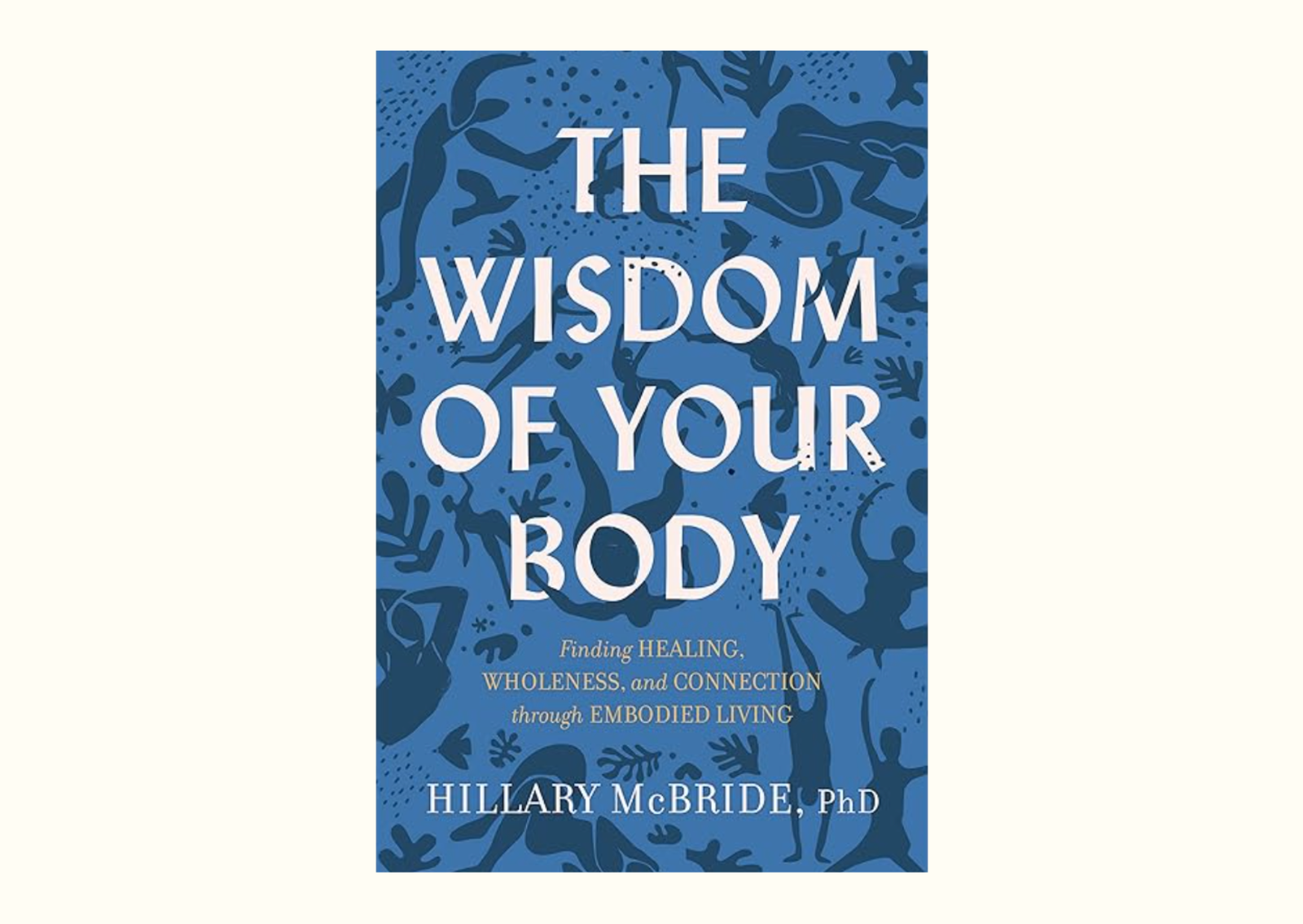
          Today, I want to share insights from the book The Wisdom of Your Body by Hillary McBride. It was an enlightening read, and I hope to convey some of its key messages to those who couldn’t attend. While I’ll highlight some edited points from the book, I highly recommend reading it yourself. McBride’s profound advice is likely to resonate differently with each of us, as healing is a deeply personal journey.

          The Wisdom of Your Body is both bold and poetic, exploring the sacred nature of our bodies in today’s world. McBride guides us through understanding our bodies from a personal perspective, emphasising the importance of our relationship with ourselves. The book delves into themes such as trauma, healing, bodily sensations, pain, sexuality, and spirituality, making it a comprehensive exploration of embodiment.

          This book prompted significant reflection for me, especially with the self-reflection exercises at the end of each chapter. Although I’ll touch on a few themes below, the book is rich with insights that you’ll likely find intriguing if you decide to read it!

          Embodiment And What It Means To Be ‘Embodied’

          McBride opens her book by underscoring how much our bodies contribute to our lives. She mentions that our bodies facilitate “human thriving, connection to ourselves and others, and the fullness of pleasure, wisdom, empathy and justice,” among other experiences (p. 2). She argues that “being fully connected to the body is about being fully alive” (p. 6).

          However, embodiment isn’t easy for everyone. Those who have experienced trauma or illness may find their bodies feel disconnected from their true selves. For individuals with diabetes, the challenge is even greater. They live in their bodies yet must frequently measure and medicate it, creating a complicated relationship.

          Personally, I’ve struggled with feeling that my body is somewhat separate from me, often perceiving it as a liability. McBride suggests that the body inherently knows how to live in a connected and present way. She encourages dialoguing with our bodies to uncover what they are trying to communicate. This idea intrigues me, though I’m still unsure what this dialogue should look like. Should I journal my body’s responses, or simply listen and interpret?

          The Traumatised Body

          In The Wisdom of Your Body, McBride explores how trauma affects bodily function. She provides a helpful diagram of the stress response, which consists of four stages: safety, social engagement, mobilization, and shutdown. When stressed, we first seek social support. If that fails, we move into the fight-flight-freeze response. If that doesn’t work, the body shuts down.

          The hierarchy of trauma – the fight-flight-freeze continuum – is not new to me.  What was new, or what caused me to think more deeply, was the idea of social engagement existing as a stage prior to mobilization.  McBride stated “If social connection won’t help me, or if it could put me at greater risk, another branch of my vagus nerve is activated, along with my hypothalamus, pituitary gland, and adrenal gland.” This suggests that, with a high enough level of threat or stress, social connection becomes irrelevant and the body’s physiology decreases that level of functioning in favour of mobilization.    If that is the case, then asking someone to be social or create a social connections when existing in a mobilization response (what I suspect diabetes is) may be futile, or even harmful.
          This notion aligns with Dr. Kelly Turner’s emphasis on social support for healing, but it also suggests that during high stress, focusing on re-regulating the nervous system might be more beneficial before pursuing social interactions.

          The Shutdown Response And Depression

          If mobilization fails to address stress, the shutdown response takes over. In modern life, this often manifests as feeling drained or wanting to isolate. McBride connects this response to depression, which is two to three times more prevalent among people with Type 1 Diabetes (Gendelman et al., 2009).

          The Mobilization Stage and Movement

          McBride highlights that when stress peaks at the mobilization stage, movement can help return us to a safer state. Movement dissipates nervous system energy, preventing further stress escalation and supporting overall well-being. McBride emphasizes that movement, rather than exercise, is crucial for physical, mental, emotional, and relational health (p. 239). Gentle, enjoyable movement is preferred over more punishing exercise routines (p. 241).

          These ideas on movement drew together my thoughts from other areas.  For instance, in her book “Radical Hope”, Dr Kelly Turner identified exercise as another healing factor.  Similarly, Daniel Darkes used running on a regular, perhaps daily, basis as a form of movement or exercise when he healed from Type 1 Diabetes.  On a day-to-day level, John Pemberton uses exercise as a key factor in optimally controlling his Type 1 Diabetes.  Lastly, I have also discussed the benefits of rebounding (a form of jumping) for health.  Perhaps I should add trauma processing to its list of benefits!

          Feelings

          McBride dedicates a chapter to “Feeling Feelings,” offering guidance on processing emotions. She identifies seven primary emotions—anger, excitement, sadness, disgust, joy, fear, and sexual excitement—and suggests that each has its own circuitry and function. This concept reminded me of Candace Pert’s work on neuropeptides and their association with emotions. Could insulin, for instance, be linked to anger?

          McBride’s advice on understanding and processing emotions is invaluable. She provides strategies for developing a grounding toolkit and recognizing bodily responses to emotions, which I highly recommend exploring.

          Thoughts And Language

          McBride discusses the connection between thoughts and bodily experiences, coining the term “bodymind” to describe this integrated system. Our language affects our physiology, which made me reconsider terms like “diabetic.” If our language shapes our body’s state, could referring to ourselves as “people with diabetes” foster a healthier self-perception?

          As McBride suggests, we should focus on nurturing our identity beyond diabetes. By living fully and embracing our broader selves, we allow new ways of thinking and being to emerge.

          GET HEALINGT1D’S FUTURE ARTICLES IN YOUR INBOX!

          Get the latest musings and findings straight to your email inbox.

            Picture of Natalie Leader
            Natalie Leader

            Natalie is a blogger with Type 1 Diabetes. Natalie’s special gifts are questioning the status quo and being a rebel. She is using these gifts to question medical ‘knowledge’ and find a true cure for Type 1 Diabetes.
            The content of the HealingT1D website is for educational and information purposes only.  It does not contain medical advice. The contents of this website are not intended to substitute for professional medical advice, diagnosis or treatment. Please always consult with your doctor, physician, or other qualified healthcare professional before making any adjustments to your routine or healthcare regime.  HealingT1D and all associated with it will not be held liable for any risks or issues associated with using or acting upon the information on this site.
            Recent Comments:
          • Conqueror Virtual Challenges

            Conqueror Virtual Challenges

            Exploring The World, One Step At A Time

            The content of the HealingT1D website is for educational and information purposes only.  It does not contain medical advice. The contents of this website are not intended to substitute for professional medical advice, diagnosis or treatment. Please always consult with your doctor, physician, or other qualified healthcare professional before making any adjustments to your routine or healthcare regime.  HealingT1D and all associated with it will not be held liable for any risks or issues associated with using or acting upon the information on this site.
            healing curing type 1 diabetes naturally

            Summary: “Conqueror Virtual Challenges” injects excitement into daily exercise routine with participants virtually explore 60+ destinations worldwide. The app offers immersive experiences with virtual postcards and factsheets, emphasising accountability, community support, and diverse exercise options. It’s a practical, motivating tool for combining fitness goals with armchair travel.

            Adding Realistic Adventure to My Routine: Conqueror Virtual Challenges

            In my ongoing journey towards healing, I’ve stumbled upon a resource that has added a new dimension to my exercise routine. In a previous blog post, I highlighted the importance of walking for health, acknowledging its benefits for nervous system regulation, blood pressure, cortisol levels, and Vitamin D levels (if you walk outside!). Nonetheless, the monotony of walking the same route each day can become an issue. However, I’ve found a solution that injects a bit of excitement into the mix: Conqueror Virtual Challenges.

            What are Conqueror Virtual Challenges?

            These challenges offer a practical way to turn your daily exercise into a S.M.A.R.T. fitness goal that keeps things engaging. Using a straightforward app, participants log their exercise distances and receive a medal upon completing the required distance for each challenge.
            What makes these challenges interesting is their global theme. As someone who enjoys exploring new places, this aspect appealed to me greatly. Whether it’s strolling through Rome or exploring the Amazon Rainforest, each challenge offers a unique backdrop. With over 60 destinations to choose from, there’s variety to keep things interesting.

            How Do Conqueror Challenges Work?

            Choosing a challenge tailored to your preferences and fitness level is straightforward. Challenges vary in location and distance, with some offering additional features like virtual postcards or street view functionality. Distances can be inputted into the Conqueror App manually or via a fitness device. I personally use my Apple Watch with it, and it works seamlessly (although I do have to wait for the end of the day before it updates that day’s distance).
            Each challenge has a specific virtual route that you walk, with Google Maps guiding your way within the app. As you progress along the route, the app delivers virtual postcards and informative factsheets about the places you’ve encountered. This transforms your walk from a mundane stroll to a global exploration.
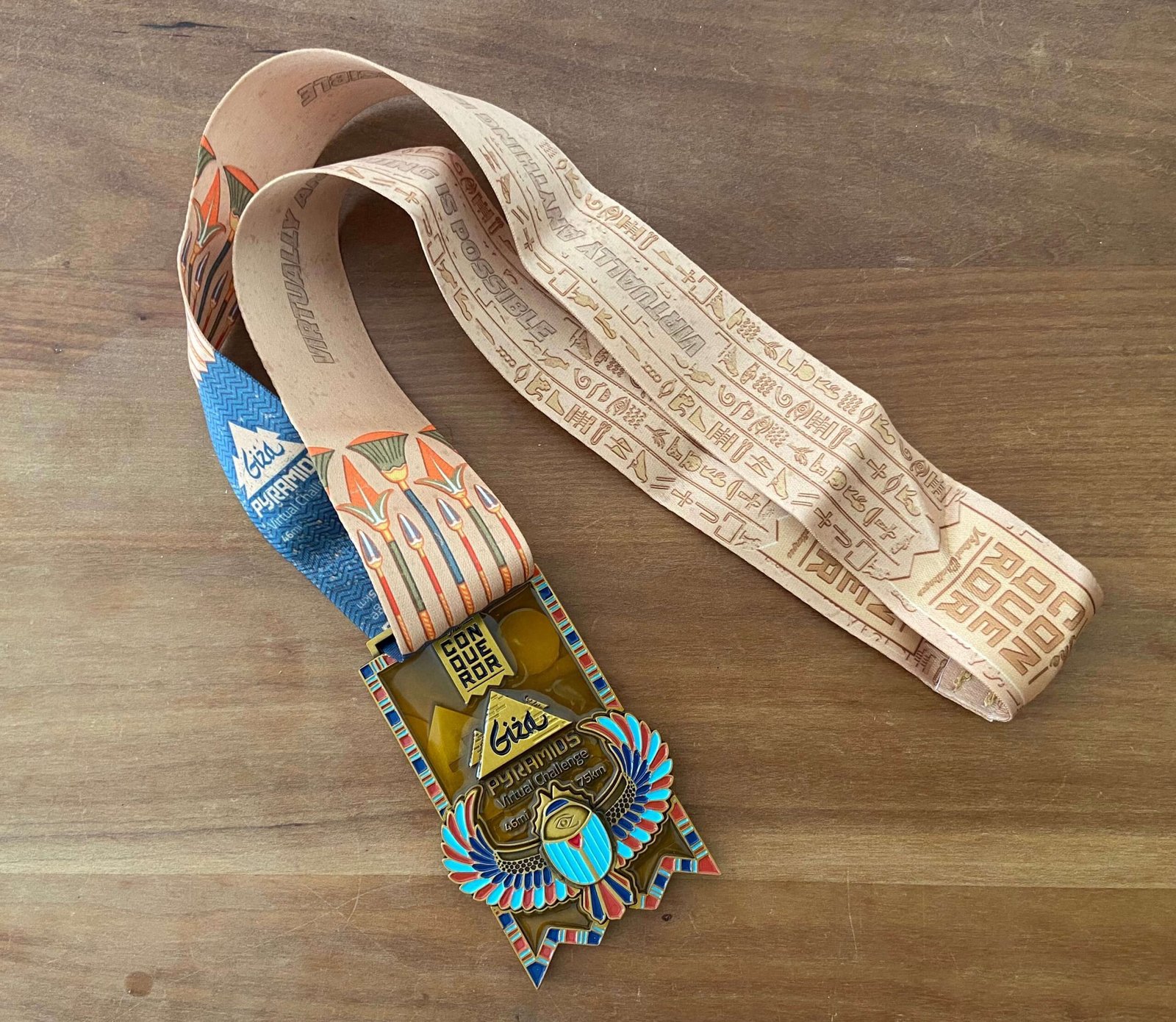
            Upon completion, they send out a medal for completing the challenge. The medals are truly beautiful and serve as tangible rewards for your efforts. I’m more than willing to walk 100km or more just to get my hands on one of these! Each medal is specifically designed for the trail you’ve walked, featuring intricate details that make them truly special. The quality is fantastic too, making you feel truly rewarded for the effort you’ve put in.
            Engaging with friends or family members adds a fun, supportive element. I’ve created a group with my husband (and sometimes my daughter), allowing us to see each other’s progress and adding a bit of friendly competition to the mix. This adds an extra layer of accountability, ensuring I stay ahead of my husband (in a friendly, uncompetitive way, of course!).

            Beyond Walking: Diverse Options for All

            While I primarily use the challenges for walking, Conqueror Virtual Challenges accommodate various forms of exercise, including swimming, running, and wheelchair-based activities. In fact, some routes seem specifically designed for other exercise types, such as the English Channel challenge for swimming or the 700-km long routes for running.
            In the hugely supportive Conqueror Community on Facebook, people share how they use challenges for purposes beyond exercise. For example, if you need accountability for another task, you could mentally assign yourself a particular distance for each completion and then post these into the challenge. Some members even run multiple challenges at once, allowing them to track progress in different areas of their lives.
            In conclusion, Conqueror Virtual Challenges offer a practical way to add variety to your exercise routine and stay motivated. Whether you’re looking to spice up your walks or explore new destinations from the comfort of home, these challenges provide a realistic and achievable approach to fitness goals.

            GET HEALINGT1D’S FUTURE ARTICLES IN YOUR INBOX!

            Get the latest musings and findings straight to your email inbox.

              Picture of Natalie Leader
              Natalie Leader

              Natalie is a blogger with Type 1 Diabetes. Natalie’s special gifts are questioning the status quo and being a rebel. She is using these gifts to question medical ‘knowledge’ and find a true cure for Type 1 Diabetes.

              The content of the HealingT1D website is for educational and information purposes only.  It does not contain medical advice. The contents of this website are not intended to substitute for professional medical advice, diagnosis or treatment. Please always consult with your doctor, physician, or other qualified healthcare professional before making any adjustments to your routine or healthcare regime.  HealingT1D and all associated with it will not be held liable for any risks or issues associated with using or acting upon the information on this site.
              Recent Comments:
            • The Glucose Never Lies

              The Glucose Never Lies

              A Programme To Give Knowledge and Empowerment To Those With Type 1 Diabetes

              The content of the HealingT1D website is for educational and information purposes only.  It does not contain medical advice. The contents of this website are not intended to substitute for professional medical advice, diagnosis or treatment. Please always consult with your doctor, physician, or other qualified healthcare professional before making any adjustments to your routine or healthcare regime.  HealingT1D and all associated with it will not be held liable for any risks or issues associated with using or acting upon the information on this site.
              healing curing type 1 diabetes naturally

              Summary: ‘The Glucose Never Lies’ website, created by diabetes veteran John Pemberton, offers valuable insights on managing blood sugars without strict low-carb diets. Structured for easy understanding, it covers foundational diabetes care and a dynamic glucose management model, benefiting continuous glucose monitor users. The author reports early positive outcomes, indicating its potential to revolutionise her diabetes management.

              Hey there!  Today, I want to share an absolutely fantastic website I discovered in my diabetes journey – a website called ‘The Glucose Never Lies‘, crafted by the amazing John Pemberton.

              A Family Legacy: Why John Pemberton Created His Website

              Imagine this: a seasoned Type 1 Diabetes veteran, a Diabetes Dietitian himself, creating a digital haven of knowledge for his own family.  John’s driving force?  His own children.  He wants to pass on his hard-won knowledge to his children, should they one day become diabetic themselves.  This is particularly important for John, given the higher inheritance rate from dads to their offspring.

              Beyond Disclaimers: The Goldmine of Information

              John explicitly and repeatedly wisely states that this website is not intended for anyone other than his children.  He emphasises how no medical relationship is formed and nothing he talks about should be construed as advice for third parties.  However, his website is a goldmine of information!  From tackling blood high  and blood sugars to handling exercise and dosing for meals and even a nerd corner for diabetes research – it’s a must-see.  I strongly recommend looking at what he has to offer and taking any bits that interest you (or even all of it!) to your medical practitioner to discuss if this might suit your particular diabetes situation.

              Health Without Low-Carb Struggles

              What I was particularly excited by is that this is the first resource I’ve found that shows a path to great diabetes health without enforcing a strict low-carb diet. As discussed here, I’ve danced with low-carb diets before, but they never stuck for me. The cravings were real, and “falling off the wagon” became a recurring theme. But now, this website offers a way to achieve more of those flat lines without swearing off carbs entirely – it’s nothing short of brilliant!

              Foundations: Diabetes Care Basics

              I have to say that I find his website fantastic.  It is designed for even the most unknowledgeable amongst us.  His programme for diabetes health basically consists of two stages.  The first, the foundations, covers the basics of diabetes care – such as bolus and basal insulin, dealing with hypoglycaemia, exercise and eating well for diabetes.  Even if you are an individual with a lot of diabetes experience behind you, I suspect that you can still gain a lot of useful information just from this part.  I am more than forty years into my diabetes journey and I still learnt some really great stuff here.  

              Dynamic Glucose Management: GAME, SET and MATCH

              Then comes what John calls ‘Dynamic Glucose Management’ – a three-part model: GAME (stop highs), SET (stay in target), MATCH (prevent lows).  Each part (GAME, SET and MATCH) is an acronym that helps you to remember each part of the model.  Together, these give you the overall map to diabetes health.  Nevertheless, John still goes beyond the foundations and the model to also offer  information on mealtime insulin and tailoring blood sugars for different kinds of exercise.
              Whilst it sounds like a lot of information (it is, after all!), it is broken down into bitesize sections and the whole website can be digested at your own pace. But, please, if you are thinking about implementing anything that The Glucose Never Lies website contains, please first discuss it with your doctor and/or diabetes team.  Making changes like this, particularly if you are relatively new to diabetes, can be challenging without the right support in place.

              Multifaceted Learning: Video And Written Wisdom

              What I particularly like about The Glucose Never Lies website is that each section comes in both video and written format.  Perfect for those end-of-day hours when time is yours but energy is low!

              Just a word of caution…  The Glucose Never Lies is built on the assumption that you are using continuous glucose monitoring.  The three systems that are included are the Freestyle Libre (which I use) plus Dexcom (which John uses) and Medtronic.  John does discuss in detail the use of these and their relative merits.  Therefore, if you don’t have access to CGMs, this approach is probably not going to be the one for you.  Whilst I think there would still be a lot of information to be gained from the website, your ability to implement it may be somewhat limited.

              Early Gains: Implementing Wisdom In Real Life

              I’m in the early stages of implementing John’s wisdom, and guess what? I’ve already shaved off 0.2% from my HbA1c. I’m seeing more flat lines on my Freestyle Libre 2, feeling more positive, and more in control of my blood sugars. Trust me, the time spent on this website is an investment in your health!

              So, head over to The Glucose Never Lies, soak in the knowledge, and let’s conquer diabetes together!

              GET HEALINGT1D’S FUTURE ARTICLES IN YOUR INBOX!

              Get the latest musings and findings straight to your email inbox.

                Picture of Natalie Leader
                Natalie Leader

                Natalie is a blogger with Type 1 Diabetes. Natalie’s special gifts are questioning the status quo and being a rebel. She is using these gifts to question medical ‘knowledge’ and find a true cure for Type 1 Diabetes.
                The content of the HealingT1D website is for educational and information purposes only.  It does not contain medical advice. The contents of this website are not intended to substitute for professional medical advice, diagnosis or treatment. Please always consult with your doctor, physician, or other qualified healthcare professional before making any adjustments to your routine or healthcare regime.  HealingT1D and all associated with it will not be held liable for any risks or issues associated with using or acting upon the information on this site.
                Recent Comments:
              • Rebounding

                Rebounding

                Improving Health On Multiple Levels

                The content of the HealingT1D website is for educational and information purposes only.  It does not contain medical advice. The contents of this website are not intended to substitute for professional medical advice, diagnosis or treatment. Please always consult with your doctor, physician, or other qualified healthcare professional before making any adjustments to your routine or healthcare regime.  HealingT1D and all associated with it will not be held liable for any risks or issues associated with using or acting upon the information on this site.
                healing curing type 1 diabetes naturally

                Summary: Rebounding, a form of aerobic exercise using a mini-trampoline, offers benefits like increased strength, cardio fitness, balance, pelvic floor health, and enhanced lymphatic system function. It aids in detoxifying the body and potentially alleviating chronic stress responses like Type 1 Diabetes. 

                What Is Rebounding?

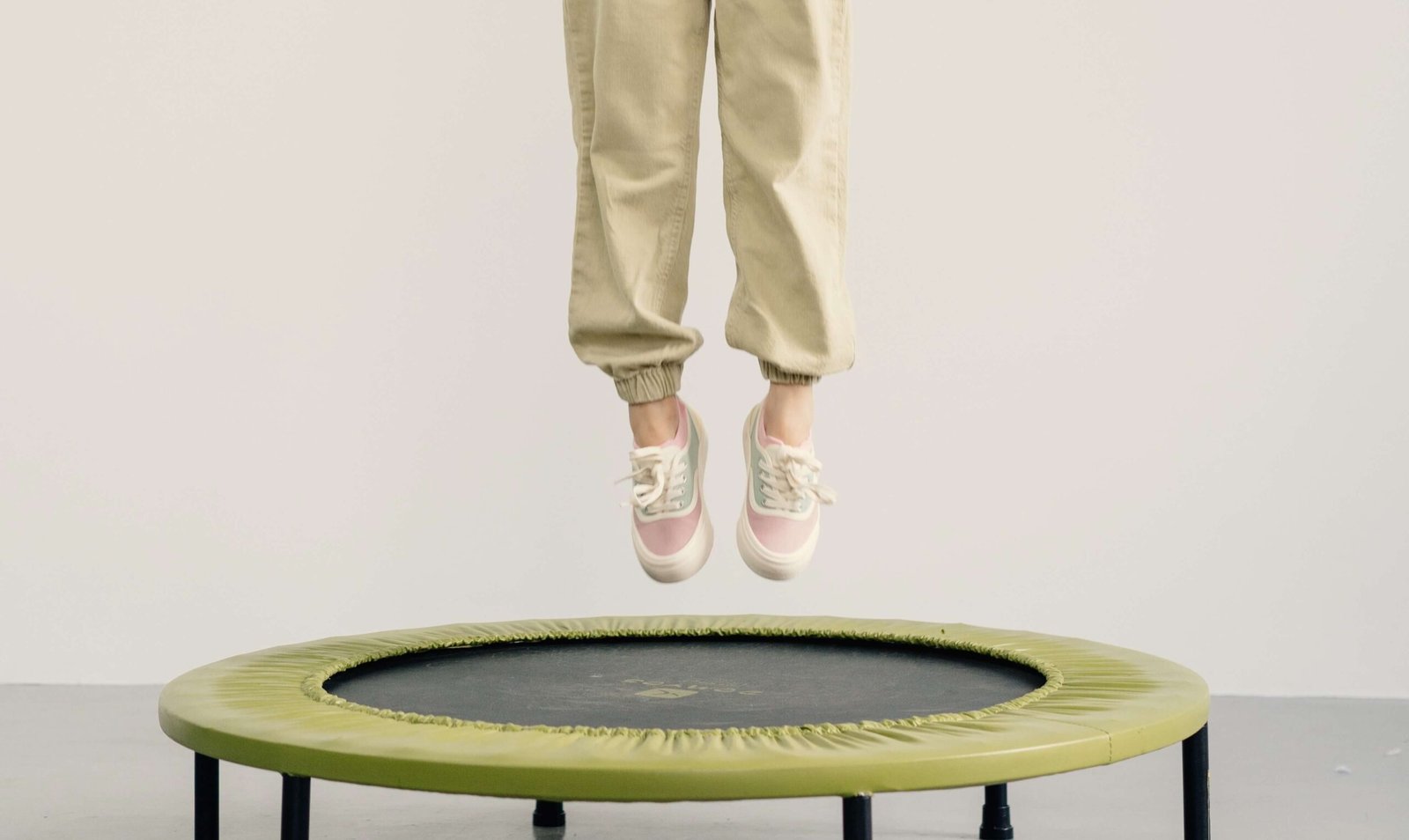
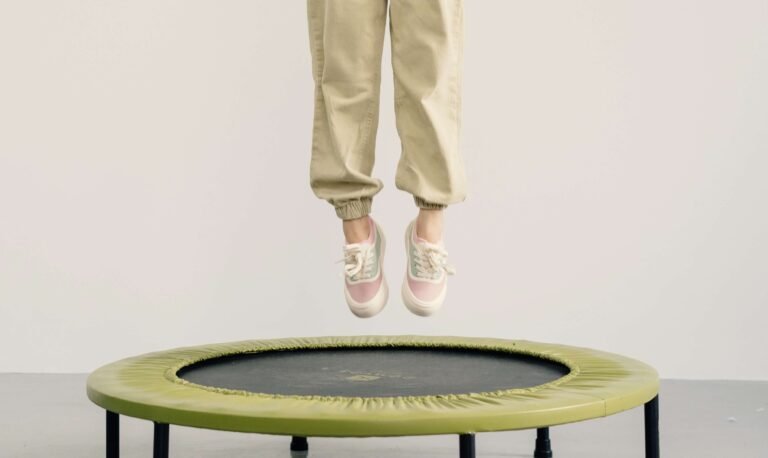
                Rebounding is a type of aerobic exercise.  It is performed by jumping up and down, either on the floor or preferably on a trampoline. Most people choose to use a mini-trampoline (as shown in the picture above).

                What Are The Benefits Of Rebounding?

                Rebounding has been found to have a host of benefits, which include:

                • Increased core and leg strength
                • Increased cardio fitness and endurance
                • Increased balance and stability
                • Increased pelvic floor health
                • Improved drainage of the lymphatic system

                What Is The Lymphatic System?

                Rebounding has been found to improve functioning of the lymphatic system.  The lymphatic system consists of a series of tissues, vessels and organs, including the spleen, small intestine and appendix.  These are all connected in a body-wide network.  A colourless, water-like fluid, called lymph, flows through this system. 

                The lymphatic system can be thought of as the sewer system of our bodies.  It removes toxins and cell debris whilst also bringing nutrients to each cell.  So getting this system to work effectively has huge benefits for healing and health.

                How To Unblock The Lymphatic System

                Unlike the circulatory system that is powered by the heart, the lymph system has no such engine.  To move lymph around the body, the body needs to move.  Unfortunately, in today’s world where movement has become more sporadic for the majority of people, human bodies are building up a toxin backlog.  The sewage system is getting blocked.

                Unblocking the lymph system can be facilitated in multiple ways but movement is the key to all methods.  One of the best methods is exercise.  Walking, running, swimming, biking and yoga, along with any other form of exercise that requires your muscles to work against gravity, all help the lymph to move around the system.  Rebounding also does this very effectively and, unlike other forms of exercise, it puts much less strain and impact on the human body.

                How Can Rebounding Help Heal Type 1 Diabetes?

                As I have argued elsewhere, I believe that Type 1 Diabetes is a chronic stress response in the body.  I believe it is a response to a system that is overloaded by toxins – physical, emotional, mental and spiritual.  The body reacts by putting itself into a fight-flight response (see my article here on that).  To provide an effective fight-flight response, the body restricts insulin to ensure that the system has enough glucose to power it through. Rebounding helps undo this toxic overload.

                I first heard about rebounding as a tool for detoxification when I attended the Tony Robbins’ event, Unleash The Power Within. Whilst it piqued my interest then, I wasn’t completely taken by the idea.  Then, I read ‘Radical Hope‘ by Dr Kelly Turner.  This book contains stories of people who have healed themselves from various types and stages of cancer.  One of the case studies in the book references a woman who was very fit and athletic throughout her life, regularly engaging in various forms of high-level exercise.  However, when she got sick with cancer, she chose to focus on rebounding as her main form of exercise.  Okay, now I was interested!

                The Positive Effects Of Rebounding

                I chose to invest in a rebounder (I got the Darchen 450 off Amazon and have found it to be fit for my purposes).  When I started, I found it surprisingly challenging.  Right from the start, I chose to do 20 minutes per day but I could only sustain that by letting myself bounce up and down without even getting my feet off the trampoline mesh.  Over time, I have built that up and now bounce around like a kid at a party (safely, of course!) for my twenty minutes.  My fitness has definitely improved!

                I have also found another positive side effect of rebounding…  I have improved my pelvic floor!  Since having my daughter seven years ago, my pelvic floor has not been totally reliable.  Anything to active or bouncy has left me running for the toilet on more than one occasion!  I tried pelvic floor exercises for years with no improvement.  I suspected that I might need to get something more serious done (surgery, perhaps) if this deteriorated further. 

                When I started rebounding, I found that I could only go for about five minutes at a time before needing a bathroom pit stop.  As time has gone on, this has decreased and I can now do my full twenty minutes with no need for the toilet and no discomfort or concern.  Another positive side effect of rebounding!

                Sustaining The Habit Of Rebounding

                I have found certain tweaks have made it easier for me to sustain the habit of rebounding.  Firstly, I make sure that I do it straight after my walk, first thing in the morning, whenever possible.  When I’ve left it for later in the day, my motivation for it seems to evaporate.  I have also found that have something to occupy me, such as someone to talk to or a good bit of music, keep me having fun so that the time passes quickly.

                I am hoping that, over time, my rebounding may also aid my exhaustion.  I have been having more and more periods of exhaustion over the last few months.  I have heard that one cause of exhaustion is toxicity in the body – the body has to work harder in such less-than-optimal conditions.  So I will wait to see if rebounding also improves my fatigue.  It can’t make it worse!

                GET HEALINGT1D’S FUTURE ARTICLES IN YOUR INBOX!

                Get the latest musings and findings straight to your email inbox.

                  Picture of Natalie Leader
                  Natalie Leader

                  Natalie is a blogger with Type 1 Diabetes. Natalie’s special gifts are questioning the status quo and being a rebel. She is using these gifts to question medical ‘knowledge’ and find a true cure for Type 1 Diabetes.

                  The content of the HealingT1D website is for educational and information purposes only.  It does not contain medical advice. The contents of this website are not intended to substitute for professional medical advice, diagnosis or treatment. Please always consult with your doctor, physician, or other qualified healthcare professional before making any adjustments to your routine or healthcare regime.  HealingT1D and all associated with it will not be held liable for any risks or issues associated with using or acting upon the information on this site.
                  Recent Comments:
                • Walking It Out

                  Walking It Out

                  Improving Blood Pressure, Cortisol Levels and Enhancing Vitamin D

                  The content of the HealingT1D website is for educational and information purposes only.  It does not contain medical advice. The contents of this website are not intended to substitute for professional medical advice, diagnosis or treatment. Please always consult with your doctor, physician, or other qualified healthcare professional before making any adjustments to your routine or healthcare regime.  HealingT1D and all associated with it will not be held liable for any risks or issues associated with using or acting upon the information on this site.

                  Summary: Diagnosed with hypertension, the author adopted daily walks as advised. Andrew Weil’s insights on walking’s benefits resonated, especially its role in regulating the nervous system crucial for her Type 1 Diabetes journey. Besides lowering blood pressure and cortisol, it enhances Vitamin D levels naturally. Walking has truly become a pivotal part of the author’s healing path.

                  I spoke in my post here about my hypertension diagnosis.  My doctor then advised me to walk every day.  This has now become a part of my daily life.

                  healing curing type 1 diabetes naturally

                  Dr Andrew Weil , author of many books – including ‘Spontaneous Healing’ (1995) – states that ‘human beings are meant to walk’.  I am inclined to agree with him because of the many benefits it yields.

                  What Are The Benefits Of Walking?

                  The benefits of walking are numerous!   Of the numerous benefits, some really stand out for me as being beneficial to healing my T1D…

                  1. Nervous System Regulation

                  Andrew Weil (1995) argues that walking harmonises the whole nervous system.  I believe that this harmonisation is crucial in healing the fight-flight-freeze response that I believe is, or results from, Type 1 Diabetes (see my post here for more on this).

                  2. Reduced Blood Pressure

                  This is a big one for me right now and a huge motivator for getting out the door every morning!  (However, I also found this study that questions the quality of the research proving it.)

                  3. Reduced Cortisol Levels

                  Walking reduces cortisol levels.  Sustained high levels of cortisol (the stress hormone) can lead to a range of health issues, including anxiety, depression, sleep problems and weight gain.  For Type 1 Diabetes, increased cortisol can also lead to elevated blood glucose readings.  Walking for just 20 minutes is enough to reduce these cortisol levels.

                  4. Improved Vitamin D Levels

                  If you walk outsie, you also gain from more exposure to the sun.  This will enable your body to increase production of Vitamin D.  Vitamin D is crucial for maintaining health in Type 1 Diabetes, as I discussed in my blog posts here.

                  Getting Started

                  Walking is a perfect exercise choice for many reasons.  It is easy to do.  You just need yourself and a good pair of shoes!  You do not need to learn anything new to do it.  It costs nothing.  You can do it anywhere – outside in an urban area or in nature, inside on a treadmill or even in circles in your own home!  There is little chance of injury (just avoid snow and ice!).

                  You should walk at a brisk pace.  The pace should be fast enough to get your breathing harder but not so hard that you can no longer hold a conversation.  

                  The British Journal of Sports Medicine states that a suitable pace of at least 100 steps per minutes is ideal.  If you do not wish to count steps whilst walking, a pedometer or fitness tracker can do this for you.

                  Walking has now become the next step (pun intended!!) in my healing journey.  Let’s see where it takes me!

                  GET HEALINGT1D’S FUTURE ARTICLES IN YOUR INBOX!

                  Get the latest musings and findings straight to your email inbox.

                    Picture of Natalie Leader
                    Natalie Leader

                    Natalie is a blogger with Type 1 Diabetes. Natalie’s special gifts are questioning the status quo and being a rebel. She is using these gifts to question medical ‘knowledge’ and find a true cure for Type 1 Diabetes.

                    The content of the HealingT1D website is for educational and information purposes only.  It does not contain medical advice. The contents of this website are not intended to substitute for professional medical advice, diagnosis or treatment. Please always consult with your doctor, physician, or other qualified healthcare professional before making any adjustments to your routine or healthcare regime.  HealingT1D and all associated with it will not be held liable for any risks or issues associated with using or acting upon the information on this site.
                    Recent Comments:
                  • High Blood Pressure

                    High Blood Pressure

                    Balancing It With Faith And Rest

                    The content of the HealingT1D website is for educational and information purposes only.  It does not contain medical advice. The contents of this website are not intended to substitute for professional medical advice, diagnosis or treatment. Please always consult with your doctor, physician, or other qualified healthcare professional before making any adjustments to your routine or healthcare regime.  HealingT1D and all associated with it will not be held liable for any risks or issues associated with using or acting upon the information on this site.
                    healing curing type 1 diabetes naturally

                    Summary: God has thrown  a curveball—hypertension! Shocked by a sudden reading of 139/72, the author is now walking daily and monitoring her blood pressure religiously. Despite her doctor’s weight-loss advice, she is focusing on rest and trusting her intuition for healing. It’s a scary journey, but she is relying on faith for guidance and hope.

                    Hypertension Enters Stage Left

                    God has thrown me a curve ball.  A big one.  I strolled into my diabetologist’s office for my latest check-up, only to be told that I have hypertension!!  

                    Say, what?!  I was a little shocked to say the least!  My blood pressure has been somewhere between 117/78 and 120/80 FOREVER!  It was so predictable that I gave up asking what it was when I went for check-ups.  There was no point.  I took my eye off the ball and this is what happened…

                    I got a reading of 139/72.  My doctor told me to lose weight and wrote me a prescription for high-dose vitamin D (I guess he’s in the clear, then…  He prescribed me something so has been a hugely effective doctor.  Yeah, right.)

                    Searching For Answers

                    Now, the thing is…  I’m a bit stumped where this has come from.  I know that I have gained some weight but I have been this weight at other points in my life without an impact on my blood pressure.  In terms of stress, it’s probably the lowest it’s ever been in my life.  In fact, my husband jokingly said that maybe it’s my body’s rebellion against the lack of stress…  It’s created a way to give me more stress and therefore get me back into my ‘normal range’!!  

                    But I’m not going to choose to understand it that way.  For me, this is a gift from God.  This is God directing me to my next level of healing.  He’s asking me to step up and make the next level of change.  And I’m taking the challenge on!

                    Ch-Ch-Ch-Ch-Changes

                    Since I found out. I have committed to walking for 30 minutes every morning.  I haven’t missed a single one.  And I won’t.  I have already pictured myself turning around  to my diabetologist at my next check-up and telling him that I’ve walked every day since I last saw him.  it’s written in stone.  It’s done.

                    I’ve also invested in a blood pressure monitor (the same one that my doctor uses…  I’m a nerd like that!).  I am monitoring it twice a day.  After all, data is key!  Interestingly, nearly all of o my readings are normal so I’m looking forward to seeing what it is at my next check-up!

                    For now, contrary to my doctor’s advice, I’ve decided not to focus on losing weight.  I outlined in my three posts on ‘Food, Food Everywhere’ (herehere and here) why I feel that health and healing for me doesn’t lie at the end of a diet and I still stick with that.  It just doesn’t feel right to be messing around with that right now and I’m going to trust my intuition on that.

                    Instead, I am implementing rest with a vengeance!!  Every day, I am now getting my hyperactive bum to stay put on a chair or other suitably relaxing piece of furniture (bed, sofa or – my favourite – the sun lounger!) for a minimum of 30 minutes.  My body  needs to relax and I’m showing it the way.

                    To be truthful, I am scared.  I am scared that my heart might explode whilst I’m exercising or that the damage being done to my body during every day of hypertension will be catastrophic or irreparable.  So I’m relying on my faith.  God has a plan that I can only see one step of right now.

                    GET HEALINGT1D’S FUTURE ARTICLES IN YOUR INBOX!

                    Get the latest musings and findings straight to your email inbox.

                      Picture of Natalie Leader
                      Natalie Leader

                      Natalie is a blogger with Type 1 Diabetes. Natalie’s special gifts are questioning the status quo and being a rebel. She is using these gifts to question medical ‘knowledge’ and find a true cure for Type 1 Diabetes.
                      The content of the HealingT1D website is for educational and information purposes only.  It does not contain medical advice. The contents of this website are not intended to substitute for professional medical advice, diagnosis or treatment. Please always consult with your doctor, physician, or other qualified healthcare professional before making any adjustments to your routine or healthcare regime.  HealingT1D and all associated with it will not be held liable for any risks or issues associated with using or acting upon the information on this site.
                      Recent Comments:
                    • The Curative Effects of Swimming

                      The Curative Effects of Swimming

                      And The Added Benefits Of Sea Swimming

                      The content of the HealingT1D website is for educational and information purposes only.  It does not contain medical advice. The contents of this website are not intended to substitute for professional medical advice, diagnosis or treatment. Please always consult with your doctor, physician, or other qualified healthcare professional before making any adjustments to your routine or healthcare regime.  HealingT1D and all associated with it will not be held liable for any risks or issues associated with using or acting upon the information on this site.
                      healing curing type 1 diabetes naturally

                      Lorem ipsum dolor sit amet, consectetur adipiscing elit. Ut elit tellus, luctus nec ullamcorper mattis, pulvinar dapibus leo.

                      So now, at this point in my healing journey, I am turning my attention towards exercise.

                      I think we all know the general benefits of exercising…  Lower weight, better blood pressure, improved mental health, lower risk of heart problems, and so on…  Basically, exercise gives you a longer and better quality of life.  So I’m not going to try to sell you on the general idea of exercise.  I’m going to assume you’ve already received that telegram!

                      Exercise As A Tool For Healing

                      I’m more specifically interested in what exercise might do for healing Type 1 Diabetes.  Dr Kelly Turner highlights in her book ‘Radical Hope’ that exercise is also a crucial component of a healing journey.  I also know that the two ex-Type 1 Diabetics Daniel Darkes and Johan Kotze both place great importance on exercise in their daily lives.  Daniel Darkes is an ultra-marathon runner. Johan Kotze enjoys CrossFit and circuit classes.

                      So it would be pretty obvious that, at this point, I can just conclude this post by saying ‘Right, I’m going to run a long way regularly and do circuit classes.  See ya!’.  The thing is…  I HATE running!  And I’m not sure my body can do it any more either.  I used to run.  I even trained for a marathon in my twenties but, in the process of doing that, my leg broke and I got a blood clot.  A kindly physiotherapist at the time told me that some bodies are just not designed for running and maybe I was one of those…!!  I might have been adamantly against that sentiment at the time but I’ve grown to agree with her now, although for a very different reason.  My reason is…  I just don’t like it.  And Dr Kelly Turner highlighted in her first book ‘Radical Remission‘ that it is important to increase positive emotions and remove negative/repressed emotions.  So running flies in the face of that.  I started to look for an alternative.

                      Finding My Form Of Exercise

                      I knew that I needed to find something that I could enjoy as well as challenge my cardio fitness.  I also knew that I wanted it to be an activity based in nature.  I believe that nature is deeply healing and gets our bodies to reset back to the way they’re actually supposed to work.  I have always found that to be true for my mental health.  When I’m all wound-up and stressed out, taking a walk in nature brings me right back to myself again.  I suspect the power of nature works the same way for the physical body.
                      My first thought was to walk.  It has a tonne of really great benefits without putting any part of the human anatomy (knees, lungs, heart) under unnecessary stress.  But I suspected that in itself might be a problem.  If it’s not stressing the cardio system, I won’t be exercising similarly to Daniel and Johan.  On top of that, I live in a city so there’s not a lot of readily available nature around me.  I would have to travel quite a distance to get somewhere nature-based and that would probably involve me walking in the desert.  Anyone up for insane amounts of dehydration?!  Yeah, me neither!

                      My next thought was the gym.  I love lifting heavy weights, it makes me feel like superman.  I have been to the gym off and on for years.  A few months ago, I was attending regularly and, in a pretty short period of time, made some impressive improvements in the amount I could lift and felt like this was it for me!  I also did back-to-back exercises so that kept my heart rate up too.  But, after a while, I realised that I was coming away from each workout feeling extremely pumped up and a bit, well, edgy and aggressive.  I was ready to fight. Weightlifting seemed to put me into a fight-or-flight mode, with the emphasis on fight.   That just didn’t sit well with me.  I wanted something that would reduce the inflammation, the fight-and-flight in my system, not increase it!  So I stopped doing that.  I needed to find something else.

                      Interestingly, I just found a passage in Dr Kelly Turner’s book ‘Radical Hope’ that adds weight to my intuitive stance that weightlifting is not good for my healing.  In the book, there is a case study of a woman called Mary, who used to be a competitive weightlifter.  She subsequently got diagnosed with cancer and then proceeded to heal herself from it.  When deciding on what exercise to do as part of her healing work, she chose to avoid the weightlifting and instead chose yoga and gentle rebounding on a trampoline.  She said she felt that going back to the gym was not right for her healing.  My intuition seems to be agreeing with hers!

                      My Choice Of Exercise: Swimming

                      Both Daniel Darkes and Johan Kotze chose exercise formats that kept them moving and on-the-go.  They effectively put themselves into flight mode (in the fight-or-flight response) during their training.  So I had to pick something that enabled movement.  I also wanted to choose something that I could do year-round. I live  very close to a swimming pool so thought that might be a good option.  It is a form of movement, it challenges my cardio system, it can be nature-based (when swimming outside) and is less likely to put unnecessary strain on my body, in the way that running did for me.

                      The thing is… I’m not very good at swimming!  As a kid, my parents quite rightly insisted that I learnt to swim.  So I went along every Wednesday afternoon when school finished to learn to swim.  I hated it!!  I kept asking my parents again and again if I could stop.  And again and again they said no.  In the end, my parents said that I had to keep going until I could swim 50 metres.  They felt that would make me an adequate enough swimmer to keep me safe around water.  The day I hit that target, I left my lessons and didn’t go back.  The result was an adult who felt comfortable enough in water but swam slowly.  I was the ‘doing-breaststroke-without-getting-my-face-or-hair-wet’ kind of swimmer!!  I was functional in the water but it could not, in any vein, be considered aerobic exercise.  

                      Four months ago, I changed that.  I decided, at the ripe old age of 41, to take swimming lessons!  I hoped to get more confident in my ability to swim, improve my stroke and get myself fast enough to actually challenge my lungs!  It worked.  I am now swimming 30 lengths of front crawl twice a week at my local pool.  I feel proud of myself and I’m looking forward to improving more still.

                      Swimming In The Sea

                      healing curing type 1 diabetes naturally

                      Now that I feel I have a certain amount of prowess in the water(!), I have decided to take on my next personal challenge…  Sea swimming.  I wanted to escape from the chlorine and other chemicals in the pool environment and instead take myself to a more natural, and therefore more healing, environment.

                      I live pretty close to the sea so I felt that sea swimming would be a great option.  This week, with my newly-gained swimming ability, I went and swam in the sea.  I was terrified!  I thought I might be dragged out to sea my some unseen current or be eaten by that Great White Shark that no one knew was in the water!!  But it was actually fabulous.  Being in such a wonderfully healing and natural environment just resonated with some part of me that had been thirsting for something unspoken.  My self-confidence and self-esteem have also increased by taking on this challenge and facing this irrational fear of mine.

                      I hope to swim in the sea at least once a week now.  It feels restorative.  It feels good

                      Health Benefits Of Sea Swimming

                      It turns out that my intuitive pull towards swimming in the sea actually comes with great merit.  It turns out that the sea environment can reduce stress, promote deep sleep and relax the body.  Furthermore, Wallace J. Nichols highlights in his book ‘Blue Mind‘ that swimming actually stimulates the parasympathetic nervous system – the system that is engaged when the body is not in fight-or-flight and is responsible for resting and repairing the body.  This is the mode in which healing takes place. 

                      The sea is also rich in a wide range of vitamins and minerals, including magnesium.  Magnesium is an important nutrient for Type 1 Diabetes.  I will talk about this in a later post but, for now, I will simply state that people with diabetes are likely to have lower magnesium levels due to insulin resistance and/or excessive loss due to fluctuating insulin sensitivities.  Moreover, increased magnesium intake is associated with better blood sugar control.  So, if it’s available to you, go and paddle in the sea!

                      GET HEALINGT1D’S FUTURE ARTICLES IN YOUR INBOX!

                      Get the latest musings and findings straight to your email inbox.

                        Picture of Natalie Leader
                        Natalie Leader

                        Natalie is a blogger with Type 1 Diabetes. Natalie’s special gifts are questioning the status quo and being a rebel. She is using these gifts to question medical ‘knowledge’ and find a true cure for Type 1 Diabetes.
                        The content of the HealingT1D website is for educational and information purposes only.  It does not contain medical advice. The contents of this website are not intended to substitute for professional medical advice, diagnosis or treatment. Please always consult with your doctor, physician, or other qualified healthcare professional before making any adjustments to your routine or healthcare regime.  HealingT1D and all associated with it will not be held liable for any risks or issues associated with using or acting upon the information on this site.
                        Recent Comments: